
Tinnitus: Why Ringing in the Ears Happens and What Can Help
Have you ever noticed a ringing, buzzing, humming or hissing sound in your ears — especially at night, when everything else is quiet? If so, you are far from alone. This experience is called tinnitus, and it affects millions of people, particularly as we get older.
For some, tinnitus is a faint background sound they barely notice. For others, it can be intrusive, frustrating, and even distressing — affecting sleep, concentration and mood. The good news is that while there is rarely an instant cure, tinnitus can very often be managed successfully, and many people go on to live comfortably with it barely bothering them at all.
In this article, we will explain what tinnitus is, why it so often goes hand in hand with hearing loss, when you should have it checked, and — most importantly — what can genuinely help.
What is tinnitus?
Tinnitus is the perception of sound when there is no external sound present. People describe it in many different ways:
Ringing
Buzzing or humming
Hissing, like air escaping
Crickets or cicadas
Whooshing or pulsing
A high-pitched tone
It may be in one ear, both ears, or feel like it is "inside the head." It can be constant or come and go, soft or loud, and it may seem worse when you are tired, stressed, or in a quiet room.
Here is the most important thing to understand: tinnitus is not a disease itself — it is a symptom. It is a sign that something in your hearing system, most often the delicate inner ear, has changed. And in the great majority of cases, it is not a sign of anything dangerous.
Why tinnitus often occurs with hearing loss
Around the world, most people with tinnitus also have some degree of hearing loss — even if they have not noticed it yet. This is no coincidence, and understanding the connection helps make sense of the treatment.
Deep inside your inner ear are thousands of tiny sensory cells that pick up sound and send signals to the brain. With age, noise exposure over the years, or other causes, some of these cells gradually wear out. When that happens, the brain receives less sound information from certain pitches than it used to.
The brain does not like silence in those missing frequencies. In trying to "fill in the gap," the hearing parts of the brain can become overactive — and that extra activity is what many researchers believe we perceive as tinnitus. You could think of it a little like phantom limb sensation: the brain generating a signal to replace input it is no longer receiving.
This is why tinnitus is often loudest in quiet environments. With no outside sound to occupy the brain, the internal sound stands out. It is also why so many people first notice their tinnitus at bedtime.
And it explains something very hopeful: when we improve the sound reaching the brain — for example, with hearing aids — tinnitus often becomes less noticeable. More on that shortly.
When tinnitus should be medically checked
Most tinnitus is harmless, but some situations deserve prompt attention. We recommend seeing your GP, or asking us to help arrange the right referral, if your tinnitus is:
In one ear only, or noticeably louder on one side
Pulsing in time with your heartbeat
Accompanied by sudden hearing loss — this should be checked urgently, ideally within days
Accompanied by dizziness, vertigo or balance problems
Following a head injury
Together with ear pain, discharge, or a feeling of blockage that does not settle
Causing significant distress, anxiety, low mood or sleep problems — you deserve support, and effective help exists
Even without these signs, if tinnitus is new, persistent, or bothering you, a proper hearing assessment is always a sensible first step. Sometimes the cause is as simple as wax pressing on the eardrum — and easily fixed.
How a hearing test helps
Because tinnitus and hearing loss are so closely linked, a comprehensive hearing test is the foundation of good tinnitus care. A thorough assessment can:
Check your ear canals and eardrums — ruling out simple causes like wax build-up or infection
Map your hearing across all pitches, revealing hearing loss you may not have noticed, including the high frequencies where age- and noise-related loss usually begins
Identify the pitch and character of your tinnitus, which helps guide management
Pick up patterns that need medical follow-up, such as a difference between the two ears
Give you answers. For many people, simply understanding what their tinnitus is — and confirming it is not something sinister — brings enormous relief. In fact, reassurance alone often makes tinnitus less bothersome, because worry is one of the things that feeds it.
Sound therapy and relaxation strategies
Tinnitus tends to be loudest when two things come together: silence and stress. Good management works on both.
Sound enrichment. Rather than sitting in complete quiet, gently filling your environment with soft, pleasant sound gives the brain something else to listen to. This might be:
A fan, or a bedside sound machine playing rain, ocean or gentle noise
Quiet music or the radio at low volume
Nature sounds through a speaker or pillow speaker at night
The aim is not to drown the tinnitus out, but to reduce the contrast between it and silence, so the brain gradually pays it less attention. Over time, this process — called habituation — is how most people come to live comfortably with tinnitus.
Relaxation and stress management. Stress and tinnitus feed each other: tinnitus causes tension, and tension makes tinnitus more noticeable. Breaking that loop genuinely helps. Useful approaches include:
Slow breathing exercises and progressive muscle relaxation
Gentle regular exercise, such as walking or swimming
Good sleep habits — a consistent bedtime, and soft background sound in the bedroom
Limiting caffeine late in the day if you find it worsens your tinnitus
Mindfulness or relaxation recordings
Counselling-based approaches. For tinnitus that causes real distress, structured programs such as tinnitus counselling or cognitive behavioural therapy (CBT) have strong research support. They do not switch the sound off — they change how the brain and mind respond to it, which is often what matters most.
How hearing aids may help when tinnitus occurs with hearing loss
If your hearing test shows hearing loss alongside your tinnitus — as it does for most people — hearing aids are often one of the most effective tools we have. Here is why:
They restore the missing sound. By returning the frequencies your brain has been missing, hearing aids reduce the "gap" that the brain was trying to fill. Many people find their tinnitus becomes quieter or fades into the background when wearing their hearing aids.
They bring in natural background sound. Everyday sounds — birds, voices, household noise — act as gentle, built-in sound therapy throughout the day.
They reduce listening strain. Struggling to hear is tiring and stressful, and stress amplifies tinnitus. Easier hearing means a calmer nervous system.
Many modern hearing aids include built-in tinnitus programs, offering soft soothing sounds (such as gentle noise or ocean-like sounds) that can be personalised for you and used whenever your tinnitus flares up.
Hearing aids are not a cure for tinnitus, and results vary from person to person. But for tinnitus that comes with hearing loss, they are frequently the single most helpful step — improving your hearing and easing your tinnitus at the same time.
Why there is usually no "quick cure" — but symptoms can often be managed
We will always be honest with you: despite what some advertisements, supplements or online "miracle cures" claim, there is currently no pill, drop or device that reliably switches tinnitus off. Please be cautious with anything promising an instant fix — at best it wastes money, and at worst it delays proper care.
The reason is that tinnitus usually arises from changes deep in the inner ear and the brain's hearing pathways, which medicine cannot yet reverse.
But — and this is the part that matters — not curable is very different from not manageable. With the right combination of:
a proper assessment and reassurance,
treatment of any hearing loss,
sound enrichment,
stress and sleep strategies, and
counselling support where needed,
the great majority of people find their tinnitus becomes significantly less intrusive. The brain learns to file it away as unimportant background noise — the same way you stop noticing the hum of the refrigerator. Many of our patients tell us that after proper management, they only remember their tinnitus when someone asks about it.
How an audiologist can help with tinnitus management
Because tinnitus lives in the hearing system, an audiologist is ideally placed to guide your care. A skilled audiologist can:
Perform the comprehensive assessment described above, and recognise when medical referral is needed
Explain your tinnitus clearly, in plain language — understanding it is the first and most powerful step
Build a personalised management plan, combining hearing aids (if appropriate), sound therapy, and practical strategies for sleep and daily life
Fit and fine-tune hearing aids with tinnitus features, adjusting them over time as your needs change
Support you through the habituation journey, which takes weeks to months — not a single appointment
Work alongside your GP and other health professionals when medical or psychological support is also needed
Tinnitus care is not a one-off fix. It is a partnership over time — which is why who you choose to look after you matters.
Why choosing an independent audiologist makes a difference
When looking for tinnitus and hearing care, you will find both large national chains and independent clinics like ours. Both employ qualified professionals — but there are real differences worth knowing about, especially for something as personal as tinnitus.
Independent clinics can recommend from all manufacturers. Many large chains are owned by, or closely tied to, particular hearing aid manufacturers, which can shape what is recommended to you. As an independent clinic, we are free to choose from the full range of brands and technologies — including those with the best tinnitus features for your specific situation — based purely on what suits you.
You see the same clinician, visit after visit. Tinnitus management depends on trust and continuity. In our clinic, the audiologist who assesses you is the one who follows your journey, remembers your story, and adjusts your plan as you progress — rather than whoever happens to be rostered on.
Time to actually listen. Tinnitus consultations should never feel rushed. Independent clinics generally have more freedom to allow longer appointments, which matters enormously when your concerns, sleep, and wellbeing need to be properly heard and addressed.
Care plans built around you, not sales targets. Our recommendations are guided by your test results and your life — and sometimes the right advice is a simple strategy, or no device at all. You will get our honest opinion either way.
Local, ongoing support. We are part of your community, and our reputation rests on the long-term wellbeing of every patient we see.
That is not to say good care cannot be found elsewhere — but for a condition like tinnitus, where personalised attention and continuity make such a difference, independent care offers real advantages.
The bottom line
Tinnitus is common, it is usually not dangerous, and — most importantly — it is manageable. If ringing, buzzing or hissing in your ears has been bothering you:
Do not panic, and do not simply "put up with it." Help exists.
Have a comprehensive hearing test. It will explain what is happening and rule out simple or medical causes.
Address any hearing loss. For most people, this is the biggest single step toward quieter, easier days.
Use sound, relaxation and good sleep habits to help your brain tune the tinnitus out.
Be patient with the process. Improvement builds over weeks and months — and the vast majority of people get there.
If tinnitus has been wearing you down, please reach out to our clinic. We will take the time to listen, assess your hearing thoroughly, explain everything in plain language, and build a management plan that is personal to you — with honest advice and no pressure.
You do not have to live at the mercy of the ringing. With the right support, quieter days are genuinely within reach.
________________________________________________________________________________________________________________________________________________________
This article is general information only and is not a substitute for personalised medical or audiological advice. If you experience sudden hearing loss, one-sided or pulsing tinnitus, or tinnitus with dizziness or pain, please seek medical attention promptly.

Fully Subsidised vs Top-Up Hearing Aids: How to Choose Without Sales Pressure
If you have started looking into hearing aids, you may have quickly discovered two things. First, there is a lot of jargon — "fully subsidised," "top-up," "premium technology," "levels" and more. Second, some places seem more interested in selling you the most expensive device than in finding out what you actually need.
We believe choosing a hearing aid should never feel like buying a used car. So in this article, we will walk you through everything in plain, honest language: what the Government's Hearing Services Program is, who is eligible, what "fully subsidised" and "top-up" really mean, which features are genuinely useful, and the questions that will protect you from sales pressure — wherever you choose to go.
What is the Hearing Services Program?
The Hearing Services Program (HSP) is an Australian Government program that provides subsidised hearing services and hearing devices to eligible Australians with hearing loss. It has been running for decades and is one of the most generous hearing care schemes in the world.
For eligible people, the program can cover:
Comprehensive hearing assessments
Hearing aids — either fully subsidised, or partially subsidised with a "top-up" payment
Fitting, programming and follow-up appointments
Ongoing maintenance, repairs and batteries through an optional maintenance agreement for a small annual fee
Regular reviews, and new devices when your current ones no longer meet your clinical needs
Once approved, you receive access to the program and can choose any accredited provider — including independent clinics like ours. You are also free to change providers at any time, and your entitlements move with you.
Who is eligible for the Hearing Services Program?
You may be eligible for the main part of the program (the voucher scheme) if you are an Australian citizen or permanent resident aged 21 or older, and you are one of the following:
A Pensioner Concession Card holder — or the spouse or dependant of one
A Department of Veterans' Affairs Gold Card holder
A DVA White Card holder, where the card covers hearing-related conditions
A member of the Australian Defence Force
Referred by a Disability Employment Services program
A few important notes:
A Commonwealth Seniors Health Card on its own does not provide eligibility — this catches many people by surprise.
There is also a separate part of the program (delivered through Hearing Australia) for people under 26, Aboriginal and Torres Strait Islander people aged 50 and over, people in remote areas, and those needing specialist services.
You do not need a GP referral to apply.
If you are not sure whether you qualify, please just call us — we can check your eligibility on the spot and help you apply. It usually only takes a few minutes, and there is no cost or obligation.
What does "fully subsidised" mean?
Fully subsidised hearing aids are devices whose full cost is covered by the government under the program. You pay nothing for the hearing aids themselves. The assessment, fitting, programming and follow-up appointments are also covered. The only usual ongoing cost is a small optional annual fee for the maintenance agreement, which covers repairs and batteries.
These are not toys or outdated cast-offs. Fully subsidised devices are genuine, modern digital hearing aids from the world's leading manufacturers, and the government regularly reviews and updates the minimum specifications they must meet.
What does "top-up" mean?
A "top-up" hearing aid is a more advanced device where the government subsidy still applies, but you pay the difference between the subsidy and the device's price. In other words, the government pays part, and you "top up" the rest.
Top-up amounts vary enormously — from a few hundred dollars to several thousand per pair — depending on the technology level. This wide range is exactly where sales pressure can creep in, so it pays to understand what you are actually paying for.
Are fully subsidised hearing aids good enough?
Here is our honest answer: for many people, yes — genuinely.
Today's fully subsidised hearing aids are digital, programmable and can be finely tuned to your exact hearing loss. They handle everyday listening very well: conversations at home, one-on-one chats, telephone, television, church or community groups in reasonably quiet settings.
If your lifestyle is mostly spent in quieter environments, a well-fitted fully subsidised device may be all you ever need. We fit many happy patients with them, and we will tell you plainly if that is the right choice for you.
Where top-up devices can genuinely earn their price is if you regularly spend time in noisy, complex environments — busy restaurants, clubs, large family gatherings, meetings — or if certain modern conveniences matter to you. The key word is your lifestyle. A premium device is not "better" if you never use the situations it is designed for.
What extra features may come with top-up devices?
Depending on the technology level, top-up devices may offer:
Stronger performance in background noise. More sophisticated processing and directional microphones that help you focus on the voice in front of you in busy places. For most people, this is the single most meaningful upgrade.
More automatic adjustment. The hearing aids sense where you are and adapt by themselves, so you rarely need to fiddle with anything.
Rechargeable batteries (see below).
Bluetooth streaming for phone calls, music and TV (see below).
Smartphone app control for discreet volume and program changes.
More natural, refined sound quality and greater fine-tuning flexibility for your clinician.
A good rule of thumb: pay for features you will actually use, in situations you actually find yourself in. If a salesperson cannot explain — specifically — how a feature helps your daily life, be cautious.
Rechargeable vs battery hearing aids
Rechargeable hearing aids sit in a charging dock overnight, like a mobile phone, and last a full day on one charge. They are a blessing for anyone with arthritis, reduced dexterity, or vision difficulties — no tiny batteries to handle every week. Note that rechargeable models are generally top-up devices, though options change over time as the program updates.
Battery-powered hearing aids use small disposable batteries lasting roughly 5 to 14 days. Changing them takes a little dexterity, but you can carry spares anywhere — useful for travellers or anyone away from power for long stretches. Under the program's maintenance agreement, batteries are supplied as part of your small annual fee.
Neither is "better." It comes down to your hands, your eyesight, and your routine. Try both in the clinic before you decide.
Bluetooth and phone connection
Many modern hearing aids connect wirelessly to smartphones. In practical terms, this means:
Phone calls stream directly into both ears — often the difference between dreading the phone and enjoying it again
You can adjust settings from an app rather than pressing tiny buttons on the device
TV sound can stream straight to your ears via a small accessory, at your own volume, while the family listens at theirs
If phone calls are a struggle, or you use a smartphone daily, Bluetooth may be one of the most worthwhile top-up features. If you rarely touch a mobile phone, you can happily skip it — do not let anyone convince you to pay for connectivity you will never use.
Can you buy hearing aids from the internet?
You certainly can — websites and even some pharmacies sell hearing aids and amplifiers, often at tempting prices. But we would urge real caution, and here is why.
A hearing aid is not like reading glasses you pick off a chemist's shelf. It is a medical device that must be precisely matched to your individual hearing loss. Your hearing is unique: you may hear low pitches almost normally but miss high pitches badly, or one ear may differ from the other. A device bought online arrives with generic settings — it has no idea what your ears need.
Here is what you miss without a qualified audiologist:
A proper diagnosis first. Sometimes "hearing loss" is actually wax, fluid, or a medical condition that needs treatment — not amplification. An online purchase skips this entirely, and can delay finding a real problem.
Accurate programming to your hearing test. Without it, a device may amplify sounds you already hear well (making things uncomfortably loud or tinny) while failing to boost the sounds you are missing. Many online buyers give up on hearing aids altogether after this experience — and wrongly conclude "hearing aids don't work for me."
Real Ear Measurement verification. Every ear canal is a different size and shape, which changes how sound behaves inside it. A qualified clinician measures the actual sound reaching your eardrum and adjusts until it is exactly right. No online seller can do this.
Correct physical fit. Poorly fitted devices whistle, fall out, or cause soreness.
Fine-tuning over time. Your brain needs weeks to adjust to hearing again, and settings almost always need refinement at follow-up visits. Online sellers cannot provide this.
Ongoing care. Cleaning, repairs, adjustments when your hearing changes, and someone accountable if things go wrong.
Studies and everyday clinical experience tell the same story: the fitting process contributes as much to success as the device itself. An expensive hearing aid poorly fitted will underperform a modest one fitted expertly. And remember — if you are eligible for the Hearing Services Program, professionally fitted hearing aids may cost you nothing anyway, which makes the online gamble even harder to justify.
Why fitting quality matters as much as the device
This point deserves its own section, because it is the part the glossy brochures never mention.
Two people can wear the identical hearing aid and have completely different results — because of how it was fitted. Quality fitting includes:
A thorough hearing assessment, not a five-minute screening
Real Ear Measurement (REM) — best-practice verification using a tiny microphone in your ear canal to confirm the device delivers precisely the right sound for your loss. Ask any provider whether they do it; not all do.
Scheduled follow-up visits to fine-tune as your brain adjusts
Honest counselling about realistic expectations, care of the devices, and communication strategies
Long-term reviews as your hearing and life change
When you choose where to be fitted, you are choosing a clinical relationship for years — not just a product off a shelf. Choose the people, not just the device.
Questions to ask before choosing
Take this list with you to any appointment, anywhere. A trustworthy clinician will welcome every question; evasive or pressured answers tell you everything you need to know.
Am I eligible for the Hearing Services Program, and can you help me apply?
Would a fully subsidised device meet my needs? If you recommend a top-up, exactly which features justify the cost for my lifestyle — and what would I lose by choosing the subsidised option?
Are you independent, or affiliated with a manufacturer? Can you offer devices from all major brands?
Do you perform Real Ear Measurement to verify every fitting?
What follow-up care is included, and for how long?
Is there a trial period? What happens if the device does not suit me — can I return or exchange it?
What are all the ongoing costs — maintenance agreement, batteries, repairs?
Rechargeable or battery — which suits my hands and routine?
Can I take this quote home and think about it? (You always can. Any pressure to "sign today for a special price" is a red flag.)
The bottom line
The Hearing Services Program is a wonderful entitlement — if you hold a Pensioner Concession Card, a DVA Gold or eligible White Card, or meet the other criteria, please make use of it.
Fully subsidised hearing aids are genuinely good, and for many lifestyles they are all that is needed.
Top-up devices are worth it for some people — mainly those in noisy environments or who value rechargeability and Bluetooth — but only when matched honestly to your life.
Avoid buying hearing aids online. Without professional fitting and verification, even a good device is likely to disappoint — and may cost you more in the long run.
The fitting matters as much as the device. Choose a clinician who takes time, verifies their work, and answers your questions openly.
As an independent clinic, we are not tied to any manufacturer and have no sales targets to meet. Our only interest is finding what genuinely works for you — and sometimes that answer is the fully subsidised option, or even "let's wait and review in a year." If you would like an honest assessment and unhurried advice, we would be delighted to help. Bring your questions — all of them.
________________________________________________________________________________________________________________________________________________________
This article is general information only and is not a substitute for personalised medical or audiological advice. Hearing Services Program eligibility rules, subsidies and device offerings are set by the Australian Government and may change — please contact our clinic or visit the Hearing Services Program website at health.gov.au for the most current details.
Do I Need Hearing Aids If My Hearing Loss Is Only Mild?
If you have recently been told you have mild hearing loss, you might be wondering: "Is it really worth doing anything about it? I can still hear most things."
It is a very fair question, and one we hear almost every day in our clinic. The short answer is: yes, even mild hearing loss is worth treating — and often the earlier, the better. In this article, we will explain why, and walk you through your options in plain, simple language, including what "fully subsidised" and "top-up" hearing aids mean, and how to choose what is right for you.
Why "mild" hearing loss is not as small as it sounds
The word "mild" can be a little misleading. Mild hearing loss does not mean a mild impact on your life. People with mild hearing loss often notice:
Conversations sound muffled, especially in cafés, restaurants or family gatherings
Others seem to "mumble"
The TV volume keeps creeping up
Following a conversation takes real effort, and you feel tired afterwards
That last point matters more than most people realise. When your ears do not pick up all the sounds of speech, your brain has to work overtime to fill in the gaps. Over months and years, this extra strain can lead to fatigue, frustration, and slowly withdrawing from social situations — often without noticing it is happening.
Hearing aids and your brain: what recent research tells us
In recent years, researchers have discovered something remarkable: looking after your hearing may also help look after your memory and thinking.
The Lancet Commission on dementia prevention has identified untreated hearing loss as one of the largest modifiable risk factors for dementia. In other words, of all the things we can actually do something about, hearing loss sits near the top of the list.
Even more encouraging, a large clinical trial published in The Lancet in 2023 (known as the ACHIEVE study) followed nearly 1,000 older adults with untreated hearing loss. Among those at higher risk of cognitive decline, the participants who received hearing aids and hearing care showed roughly 48% slower decline in thinking and memory over three years compared with those who did not.
Scientists believe this may be because hearing well keeps the brain actively engaged, makes listening less exhausting, and helps people stay socially connected — all things that are good for long-term brain health.
To be clear: hearing aids are not a guaranteed shield against dementia, and research is still ongoing. But the evidence is strong enough that treating hearing loss — even mild hearing loss — is now widely seen as a sensible step for healthy ageing.
"Won't hearing aids make my hearing worse, or make me dependent on them?"
This is one of the most common worries we hear, so let us put your mind at ease.
Hearing aids will not damage your hearing. Modern hearing aids are carefully programmed by your clinician to give you only the amount of amplification your ears need, at safe and comfortable levels. They are not simply "turning everything up loud." A properly fitted hearing aid protects your comfort — many even limit sudden loud sounds better than the unaided ear experiences them.
Hearing aids do not create dependence — they restore what you were missing. Some people notice that when they take their hearing aids out, the world suddenly sounds quieter than they remembered. This is not because their hearing got worse. It is because their brain has readjusted to hearing properly again, and they can now notice what they had slowly been missing. It is a bit like glasses: taking your glasses off does not mean your eyes were harmed — it simply reminds you how helpful they are.
In fact, the opposite of dependence is true. When hearing loss goes untreated, the parts of the brain that process sound get less practice over time. Keeping those pathways active with well-fitted hearing aids helps preserve your ability to understand speech in the years ahead.
Understanding your options: fully subsidised vs top-up hearing aids
If you are eligible for the Australian Government Hearing Services Program (for example, if you hold a Pensioner Concession Card or are a DVA card holder), you will hear two terms: "fully subsidised" and "top-up."
What does "fully subsidised" mean?
Fully subsidised hearing aids are provided at no cost to you for the devices themselves — the government covers them under the program. These are genuine, modern digital hearing aids from reputable manufacturers, fitted and adjusted by your hearing clinician. A small annual maintenance fee usually applies if you choose ongoing battery and repair cover.
What does "top-up" mean?
A top-up hearing aid means the government subsidy still applies, but you pay the difference ("top up") to receive a device with more advanced features. The subsidy reduces the price, and you contribute the rest. Top-up costs vary widely depending on the technology level you choose.
Are fully subsidised hearing aids good enough?
For many people — honestly, yes. Fully subsidised hearing aids today are far better than the devices of even ten years ago. They are digital, programmable, and can be finely tuned to your individual hearing loss. For someone with mild hearing loss who spends most of their time in quieter settings — at home, one-on-one conversations, watching TV — a fully subsidised device can work very well.
Where top-up devices earn their keep is in more challenging situations, or when certain conveniences matter to you.
What extra features may come with top-up devices?
Higher-level devices typically offer some or all of the following:
Better performance in background noise. More advanced processing and directional microphones help you focus on the person in front of you in busy restaurants, clubs, or family dinners.
More automatic adjustment. The hearing aid senses your environment and adapts on its own, so you rarely need to touch it.
Rechargeable batteries. No fiddly battery changes — just pop them in a charger overnight.
Bluetooth streaming. Phone calls, music, and even TV sound can stream directly into your hearing aids.
Smartphone apps. Adjust volume or settings discreetly from your phone.
More natural sound quality and finer fitting flexibility.
None of these features are essential for everyone. The right choice depends on your lifestyle, not on the price tag.
Rechargeable vs battery hearing aids
Rechargeable hearing aids sit in a small charging dock overnight, much like a mobile phone. They are wonderful for anyone who finds small batteries fiddly, has arthritis or reduced dexterity, or simply prefers convenience. One overnight charge typically lasts a full day.
Battery-powered hearing aids use small disposable batteries that last around 5 to 14 days depending on the size and usage. Their advantage is that you can carry spare batteries with you — handy if you travel or are away from power for long periods.
Neither option is "better" — it comes down to your hands, your habits, and your lifestyle. We are always happy to let you try both in the clinic before deciding.
Bluetooth and phone connection
Many modern hearing aids can connect wirelessly to your mobile phone. This means:
Phone calls stream straight into both ears, making the caller's voice much clearer — a huge help for people who struggle on the phone.
You can adjust your hearing aids from an app instead of pressing tiny buttons.
TV sound can be streamed directly to your hearing aids using a small accessory, so you hear the TV clearly at your own volume while the family watches at theirs.
If you use a smartphone regularly, or phone calls are difficult for you, Bluetooth connectivity is often one of the most life-improving features to consider. If you rarely use a mobile phone, you may not need it at all — and that is perfectly fine.
Why fitting quality matters as much as the device
Here is something the advertisements rarely tell you: a well-fitted basic hearing aid will almost always outperform a poorly fitted premium one.
A hearing aid is only as good as the way it is programmed for your ears. Quality fitting includes:
A thorough hearing assessment, not just a quick screening
Real Ear Measurement (REM) — a verification test using a tiny microphone in your ear canal to confirm the hearing aid is delivering exactly the right amount of sound for your hearing loss. It is considered best practice, yet not every provider does it.
Fine-tuning over follow-up visits, because your brain needs a few weeks to adjust, and your settings should be reviewed as you settle in
Ongoing care — cleaning, adjustments, annual reviews, and support when things change
When you choose a clinic, you are not just buying a device. You are choosing the people who will look after your hearing for years to come. That relationship, and their skill, matter enormously.
Questions to ask before choosing
Before deciding on a hearing aid or a clinic, we encourage you to ask:
Am I eligible for the government Hearing Services Program, and what will it cover for me?
Would a fully subsidised device suit my lifestyle, or would specific top-up features genuinely benefit me? Which ones, and why?
Do you perform Real Ear Measurement to verify the fitting?
What follow-up care is included — how many appointments, and for how long?
Is there a trial period, and what happens if the device does not suit me?
What are the ongoing costs — maintenance, batteries, repairs, insurance?
What happens if my hearing changes — can this device be adjusted?
Rechargeable or battery — which suits my hands and my routine?
A trustworthy clinician will welcome these questions and answer them clearly, without pressure.
The bottom line
Mild hearing loss is easy to dismiss — and easy to treat. Acting early means:
Easier, less tiring conversations with the people you love
Staying socially active and confident
Supporting your long-term brain health, as growing research suggests
A gentler adjustment, because the brain adapts to hearing aids more easily when hearing loss is treated early rather than after years of missing sounds
You will not become dependent on hearing aids, and they will not harm your hearing. What they will do is give you back the sounds — and the moments — that mild hearing loss quietly takes away.
If you are unsure where you stand, the best first step is simple: book a comprehensive hearing assessment. We will explain your results in plain language, discuss whether hearing aids are right for you (sometimes the honest answer is "not yet"), and help you weigh up fully subsidised and top-up options with no obligation.
Your hearing connects you to the people and life you love. It is worth looking after — even when the loss is "only mild."
_____________________________________________________________________________________________________________________________________________________________________
This article is general information only and is not a substitute for personalised medical or audiological advice. Eligibility for the Hearing Services Program and subsidy details may change — please contact our clinic or visit the Australian Government Hearing Services Program website for current information.

Signs You Need a Hearing Test: What to Look For and What to Expect
Here is a curious thing about hearing loss: it almost never announces itself. It does not arrive overnight like a cold. Instead, it creeps in so gradually — often over years — that most people are the last to notice it in themselves. Family members usually notice first.
Because of this, many Australians wait seven to ten years after first noticing difficulties before doing anything about it. That is a long time to miss parts of conversations, punchlines, and grandchildren's voices — especially when finding out where you stand is as simple as a comfortable, painless hearing test.
In this article, we will cover the early signs that suggest it is time for a hearing test, why a comprehensive test matters, and exactly what to expect at your first audiology appointment — so there are no surprises and nothing to be nervous about.
The early signs of hearing loss
Hearing loss rarely feels like "not hearing." More often, it feels like other people mumbling, or the world being a little harder work than it used to be. See how many of these sound familiar:
In conversations:
People seem to mumble, or speak too quickly — especially women and children, whose voices are higher-pitched
You often ask people to repeat themselves ("Pardon?", "What was that?")
You catch that someone spoke, but miss what they said
You answer the wrong question sometimes, or nod along without really following
Phone conversations are harder than face-to-face ones
In noisy places:
Restaurants, cafés, clubs and family gatherings have become hard work — you hear noise, but not the person across the table
You find yourself watching people's lips to help you follow
You sit quietly in groups where you used to join in
At home:
The TV volume has crept up, and family members comment on it
You miss the doorbell, the phone ringing in another room, or the microwave beeping
Your partner says you don't listen — when really, you don't hear
How you feel:
Conversations leave you tired or drained — this "listening fatigue" is one of the most telling early signs
You feel less confident in social situations, or find yourself avoiding gatherings you used to enjoy
You have ringing, buzzing or hissing in your ears (tinnitus) — which very often accompanies early hearing loss
If even two or three of these ring true, it is worth having your hearing checked. And here is something important: noticing these signs does not automatically mean you need hearing aids. Sometimes the cause is as simple as ear wax. Sometimes the answer is "your hearing is fine — let's just keep an eye on it." A hearing test simply gives you the facts, so you can make informed decisions.
Why acting early matters
You might wonder: if it is only mild, why not wait until it gets worse? Three good reasons:
Your brain stays in practice. Hearing happens in the brain as much as in the ears. When certain sounds go missing for years, the brain's listening pathways get less exercise, and understanding speech — especially in noise — can become harder to restore later. People who address hearing loss early consistently adjust more easily and get better results.
Your brain health may benefit. As we discussed in our earlier article, untreated hearing loss has been identified by researchers as one of the largest modifiable risk factors for dementia, and a major 2023 clinical trial found that treating hearing loss significantly slowed cognitive decline in at-risk older adults. Looking after your hearing is increasingly seen as part of looking after your whole self.
Your connections stay strong. Untreated hearing loss quietly nudges people away from conversations, gatherings and activities. Catching it early keeps you in the middle of the life you love — which matters for mood, confidence and wellbeing.
Why a comprehensive hearing test is important
Not all hearing checks are the same, and the difference matters.
You may have come across free quick screenings — online tests, phone checks, or five-minute beep tests in shopping centres or pharmacies. These can be a useful nudge, but they only answer one rough question: "might there be a problem?" They cannot tell you what the problem is, why it is happening, or what to do about it. Some are also, frankly, designed mainly to sell you something.
A comprehensive hearing assessment with a qualified audiologist is a different thing altogether. It typically includes:
A conversation about your history — your health, medications, noise exposure over your lifetime, family history, and exactly where you struggle day to day
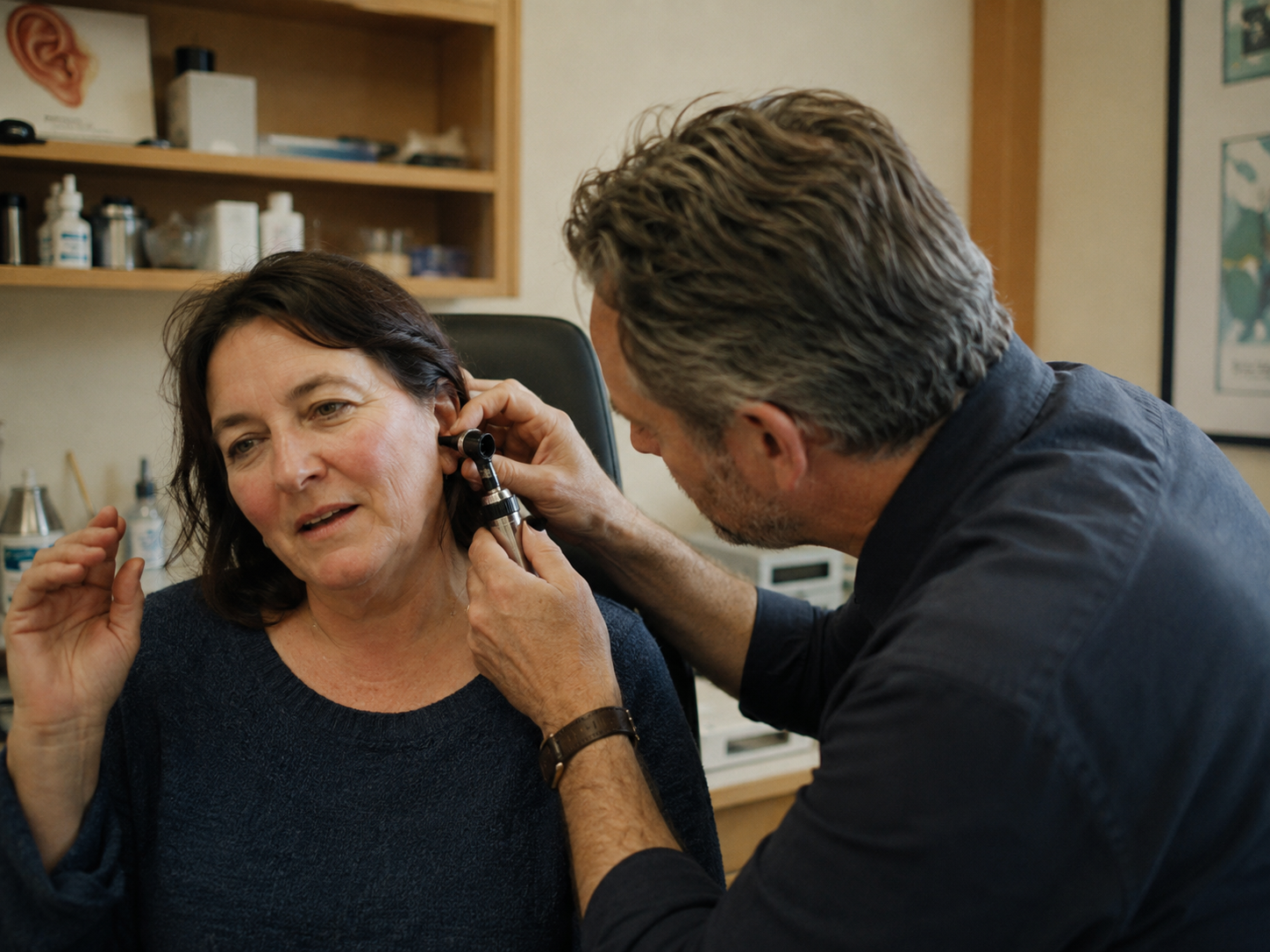
A look inside your ears (otoscopy) — checking the ear canal and eardrum for wax, infection, or anything needing medical attention. You would be surprised how often the "hearing loss" turns out to be wax.
Pure tone audiometry — the familiar "press the button when you hear the beep" test, measuring the softest sounds you can hear across all the pitches of speech, for each ear separately
Bone conduction testing — a clever extra step that tells us where the problem lies: the middle ear (often medically treatable) or the inner ear (where hearing aids help)
Speech testing — because hearing beeps and understanding words are different skills. This shows how clearly you understand speech, sometimes in background noise, which reflects real life far better than beeps alone
Middle ear testing (tympanometry) where needed — checking how the eardrum and middle ear are functioning
Why does all this matter? Because the pattern of your results determines everything that follows. It tells us whether you should see a doctor first, whether hearing aids would genuinely help, which sounds need boosting and which do not, and what realistic expectations look like. A five-minute screening simply cannot do that — and decisions about your hearing deserve better than guesswork.
What to expect at your first audiology appointment
If you have never had a proper hearing test, let us take away the mystery. Here is how a first appointment with us typically goes:
1. A friendly chat (10–15 minutes). We start by getting to know you: your health background, any ear problems past or present, your work and noise history, and — most importantly — where hearing is letting you down in daily life. Is it the TV? Restaurants? The phone? Your grandchildren? This conversation shapes everything.
Tip: it is genuinely helpful to bring a family member or close friend. They often notice things you have adapted to — and four ears remember more of the discussion afterwards.
2. Looking in your ears. A quick, painless look with a small light to check for wax or anything that needs medical care.
3. The hearing test itself (20–30 minutes). You will sit in a quiet room or sound booth wearing headphones and press a button whenever you hear a tone — even a very faint one. There are no needles, nothing enters your ear beyond a soft earphone, and nothing hurts. You cannot "fail" — it is a measurement, not an exam, so please don't be nervous or try to perform. We will also test your understanding of words, and possibly your middle ear function.
4. Your results, explained properly. This is where we differ from a quick screening. We will show you your results on a chart called an audiogram and explain — in plain language, no jargon — exactly what you hear well, what you are missing, and why that matches the difficulties you described. Most people find this moment genuinely eye-opening: "So that's why everyone seems to mumble!"
5. Honest advice about next steps. Depending on your results, the recommendation might be:
Your hearing is normal — wonderful; we will suggest when to re-check
There is wax or a medical issue — we will guide you to your GP or a specialist first
There is hearing loss, but it's not affecting you enough yet — we may simply suggest monitoring it yearly
Hearing aids would genuinely help — we will explain your options, including whether you are eligible for the Government's Hearing Services Program, and whether a fully subsidised device would suit you
Whatever the outcome, you will leave understanding your own hearing — and you will never be pressured into anything. The whole appointment usually takes around an hour.
A few practical tips before you come:
If you have had hearing tests before, bring the results if you can
Bring a list of your medications
If your ears feel blocked, mention it when booking — wax may need clearing first
Bring your Pension or DVA card if you have one, so we can check your Hearing Services Program eligibility on the spot
The bottom line
Hearing loss whispers before it shouts. If people seem to mumble, the TV keeps getting louder, noisy rooms have become hard work, or conversations leave you weary — those are your ears asking for a check-up.
A comprehensive hearing test is easy, comfortable and painless. It takes about an hour, and it answers questions that quick screenings cannot: what is happening, why, and what (if anything) to do about it. Often the news is better than people fear — and when action is needed, early is always easier.
If any of the signs in this article sounded familiar — or if someone who loves you gave you this article to read (it happens more than you'd think!) — we would be delighted to see you. No pressure, no obligation: just clear answers about your hearing, explained kindly and honestly.
Because life sounds better when you can hear all of it.
___________________________________________________________________________________________________________________________________________________________________
This article is general information only and is not a substitute for personalised medical or audiological advice. If you experience sudden hearing loss, ear pain, discharge, or hearing loss in one ear only, please seek medical attention promptly.

Who Is Really Looking After Your Hearing? The Honest Difference Between Large Hearing Chains and Independent Clinics
It All Begins Here
When you decide to do something about your hearing, you face a choice most people never think about: where to go. Search online or walk through any shopping centre and you will see large, well-advertised hearing clinic chains everywhere. Tucked away more quietly are independent audiology clinics — locally owned practices like ours.
On the surface, they can look similar: qualified clinicians, modern equipment, the same government program. But behind the scenes, the two models can work quite differently — and those differences can shape the advice you receive, the devices you are offered, and the care you get for years to come.
We want to explain those differences openly and fairly. Not to frighten you, and not to claim that every chain clinic gives poor care — many employ genuinely caring, skilled clinicians. But we believe you deserve to understand how the industry works, so you can ask the right questions wherever you go. And yes — we will also explain, without apology, why we are proud to be independent.
Something most people don't know: who owns the big chains
Here is the single most important fact about the hearing industry, and one that surprises almost everyone:
Many of the large hearing clinic chains are owned by, or closely tied to, hearing aid manufacturers.
Over the past two decades, the handful of major manufacturers who make most of the world's hearing aids have steadily bought or built retail clinic networks. The industry calls this "vertical integration": the same corporate group that makes the hearing aids also owns the clinics that recommend and sell them.
Think about what that means in practice. When a clinic is owned by a manufacturer, its clinicians typically fit — overwhelmingly or exclusively — that manufacturer's own brands. The recommendation you receive may be shaped not by "which device on the entire market best suits this person?" but by "which of our company's devices shall we fit?"
The clinician in front of you may be entirely well-meaning. But they are working within a system where the range of options has already been narrowed before you even walked in the door — and this ownership connection is rarely explained to clients.
To be fair: manufacturer-owned clinics still fit genuine, quality hearing aids, and for some people the in-house brand may indeed suit them well. The issue is not the products. The issue is that you cannot receive truly independent advice from a business whose parent company makes the product being recommended. That is not a criticism of any individual — it is simply how the structure works.
When a clinic becomes a shop: sales culture and targets
The second difference is about business culture.
Large retail chains, in any industry, tend to run on numbers: revenue targets, conversion rates, average sale values. In parts of the hearing retail sector, this has translated into clinicians being given sales targets, unit quotas, or commission and bonus structures tied to hearing aid sales — and in some cases, incentives that favour higher-priced "premium" devices.
This has been reported publicly over the years, including by consumer advocates and in industry reviews, and it creates an uncomfortable tension. A hearing clinician should be a health professional first — like your GP or physiotherapist. Imagine if your doctor earned a bonus for every medication prescribed. Even the most ethical person would find their judgement under quiet pressure.
For you as a client, a sales-driven culture can show up as:
Being steered toward top-up or premium devices without a clear explanation of why the fully subsidised option wouldn't do
"Today only" discounts and pressure to sign before you leave
Appointments that feel rushed toward a purchase rather than a discussion of your needs
Little mention of alternatives — including the honest alternative of waiting, or not getting hearing aids at all yet
Again, we want to be fair: plenty of clinicians inside chains push back against these pressures every day and do right by their clients. But the pressure should not exist in the first place — and in an independent clinic, it doesn't have to.
The advertising you see everywhere
You have probably noticed the marketing: letterbox flyers, newspaper advertisements, "free hearing checks," telephone calls, invitations to "hearing information sessions," and offers that expire suspiciously soon.
Large chains spend heavily on this kind of marketing, and older Australians are the main audience. Some of it is harmless awareness-raising — and to be clear, encouraging people to get their hearing checked is a good thing. But some tactics deserve your caution:
"Free" screenings designed as sales funnels. A quick beep test whose main purpose is to book you into a sales appointment is not the same as a comprehensive clinical assessment.
Urgency and scarcity. Genuine clinical advice does not expire on Friday. Any offer that pressures you to decide today is designed to stop you comparing.
Repeated follow-up calls after a single enquiry.
Trade-in and upgrade campaigns encouraging you to replace hearing aids that may still be working perfectly well.
A simple rule of thumb serves you well: the more aggressively hearing care is marketed to you, the more carefully you should read the fine print. Good hearing care doesn't need a countdown timer.
Why independent audiology clinics matter
Independent clinics are locally owned practices with no ownership ties to any hearing aid manufacturer. That single structural fact changes almost everything downstream:
Genuinely open recommendations. An independent audiologist can select from all the major manufacturers — every brand, every technology level. The question becomes what it always should be: which device, at which price point, best suits this person's hearing, lifestyle and budget? Sometimes that is a premium device. Very often it is a fully subsidised one. The point is that nothing is off the table, and nothing is pre-decided.
Advice with no strings attached. With no corporate sales targets or manufacturer quotas, an independent clinician is free to give you the same advice they would give their own parent — including "you don't need hearing aids yet," which is advice a sales-driven system struggles to give.
Continuity of care. In independent clinics you typically see the same clinician visit after visit, year after year. They know your history, your ears, and your story. Hearing care is a long-term relationship — hearing changes, devices need adjusting, life circumstances shift — and continuity makes every step better. Large chains, with rotating staff and higher turnover, often cannot offer this.
Time. Independent practices generally control their own appointment lengths. That means unhurried assessments, proper explanations, and the space to ask every question you have.
Accountability to the community, not a head office. An independent clinic lives or dies on its local reputation. Every recommendation we make walks back out into our own community — to your neighbours, your friends, your bowls club. That is a powerful, healthy form of accountability, and we would not have it any other way.
None of this means independent automatically equals perfect, or chain automatically equals bad. It means the structure of independent care removes the conflicts of interest — so the only interest left in the room is yours.
Why we are proud to be independent
We chose independence deliberately, and we would choose it again tomorrow. Here is what it means in our clinic, in plain terms:
We are not owned by, or affiliated with, any hearing aid manufacturer. We recommend from the full market, and we will happily tell you the pros and cons of every option — including the ones that earn us less, or nothing at all.
Our clinicians have no sales targets and no commissions. Nobody in this practice is paid more for selling you more. Our recommendations are based on your hearing test, your lifestyle, and your goals — full stop.
We will always tell you when the fully subsidised option is enough, when waiting is wise, or when the right next step is your GP rather than a hearing aid.
You will see the same clinician who knows you, at every visit, for as long as you are with us.
We put everything in writing, with no expiry-date pressure. Take your quote home. Compare us with anyone. Ask us the hard questions — we published a list of them in our earlier article on choosing hearing aids, and we meant every one.
We are a small business in a market dominated by very large ones, and we are honestly proud of that. Being independent is not the easy path — we don't have national advertising budgets or shopping-centre signage on every corner. What we have instead is the freedom to practise the way healthcare should be practised: your needs first, always.
How to protect yourself — wherever you go
Whether you choose us, another independent clinic, or a chain, these questions will serve you well:
"Who owns this clinic? Are you affiliated with any hearing aid manufacturer?" You are entitled to a straight answer.
"Can you offer hearing aids from all major manufacturers?" If the answer is one or two brands, ask why.
"Are your clinicians paid commission or given sales targets?"
"Would a fully subsidised device meet my needs? Why or why not — specifically for me?"
"Can I take this quote home and think about it?" The only acceptable answer is yes.
An honest provider — chain or independent — will answer all five comfortably. Hesitation, deflection, or pressure tells you everything you need to know.
The bottom line
The hearing industry has a structural secret hiding in plain sight: many of the biggest clinic chains are owned by the very companies whose hearing aids they recommend, and some operate with retail sales cultures that sit awkwardly with healthcare. That does not make every chain clinician untrustworthy — but it does mean the system around them is not built purely around you.
Independent audiology clinics exist to be exactly what hearing care should be: health professionals with no product to push, choosing freely from the whole market, accountable to their community, and free to say "you don't need anything yet."
That is the kind of clinic we chose to build, and the kind of care we promise every person who walks through our door. Your hearing — and your trust — deserve nothing less.
If you would like a second opinion on a quote you have received elsewhere, or simply an honest, unhurried assessment of your hearing, we would be genuinely pleased to help. Bring your questions. Bring the hard ones.
_______________________________________________________________________________________________________________________________________________________
This article reflects general patterns in the hearing care industry and is intended to help readers make informed choices. It does not refer to any specific company, clinic or brand, and is not a substitute for personalised medical or audiological advice.
Why Are Premium Hearing Aids So Expensive? An Honest Look Behind the Price Tag
It All Begins Here
It is one of the most common questions we hear — sometimes asked politely, sometimes with understandable frustration:
"How can something this tiny cost thousands of dollars?"
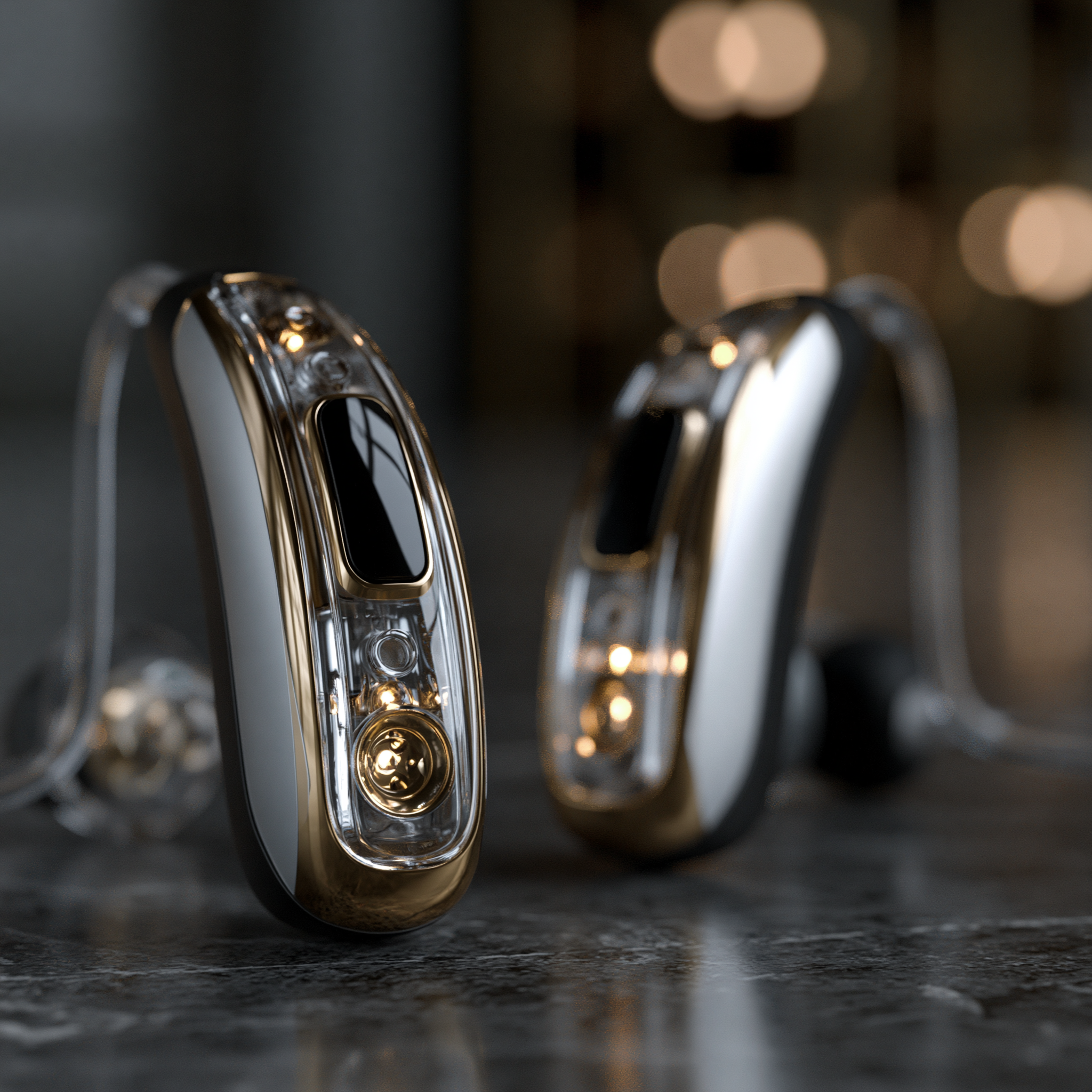
It is a completely fair question. A premium pair of hearing aids can cost as much as a decent second-hand car, yet each device is smaller than a walnut. Meanwhile, you can buy a smartphone — a far more complex-looking gadget — for a fraction of the price.
Most of the industry avoids answering this question directly. We would rather answer it honestly, because we believe you make better decisions when you understand what you are actually paying for — the genuinely impressive parts and the less flattering parts. Both exist. Here is the full picture.
Part one: the genuine technology inside that tiny shell
Let's start with what is real and remarkable, because premium hearing aids truly are extraordinary pieces of engineering.
A supercomputer smaller than a coffee bean. Inside every modern hearing aid sits a custom-designed computer chip that processes sound millions of times per second. It must separate speech from noise, work out which direction sounds are coming from, sharpen the voice in front of you, soften the clatter behind you, and prevent whistling — all in a few thousandths of a second. Any slower, and the sound would lag behind people's lips. Your smartphone, for all its power, does not have to do anything this fast, this precisely, on this little battery power.
Extreme miniaturisation. Everything — microphones, computer chip, amplifier, speaker, wireless radio, battery — must fit inside a device small enough to hide behind your ear, survive sweat, rain, ear wax and the occasional drop onto the bathroom floor, and run all day on a battery the size of a shirt button. Shrinking electronics to this scale while keeping them reliable is genuinely expensive engineering.
Years of research behind every model. The major manufacturers each spend enormous sums — collectively hundreds of millions of dollars every year — on research and development. This includes not just electronics, but decades of hearing science: how the brain processes speech in noise, how amplification should differ for different types of hearing loss, how to make sound comfortable rather than merely loud. Features like automatic environment detection, artificial intelligence–based noise reduction, and machine learning trained on millions of real-world sound scenes come from this research. When you buy a premium device, part of the price funds the research that produced it — and the research that will produce the next generation.
Medical-grade standards. Hearing aids are regulated medical devices, not consumer gadgets. They must pass extensive safety, reliability and performance testing, and manufacturers must maintain quality systems, clinical evidence and regulatory approvals in every country they sell in. All of that costs money before a single device is sold.
A small market carrying big costs. Here is a point most people never consider: hearing aids are made in the millions, while smartphones are made in the billions. When development costs are spread across a much smaller number of units, each unit must carry a much bigger share. This alone explains a surprising amount of the price difference between hearing aids and mainstream electronics.
So yes — a meaningful portion of a premium price tag reflects genuine, hard-won technology. But it is not the whole story, and we promised you honesty.
Part two: the parts of the price that are not technology
The distribution chain takes its share. Between the factory and your ears, a hearing aid typically passes through several hands — manufacturer, sometimes a distributor, then the clinic — and each adds a margin. As we explained in our earlier article on chains and independent clinics, much of the industry is also vertically integrated, meaning the same corporate groups profit at more than one step of that chain. The result is that the manufacturing cost of the device itself is a modest fraction of the final retail price. That is true of many industries — but in hearing care, the gap is larger than most.
Heavy marketing is built into the price. The glossy brochures, television campaigns, letterbox flyers, sponsored "information sessions" and constant advertising you see are enormously expensive — and every dollar of it is ultimately recovered from device prices. When an industry spends heavily persuading you to buy, you are the one funding the persuasion. It is worth remembering that the most advertised option and the best option are not always the same thing.
"Premium" tiers are partly a pricing strategy. Manufacturers typically release each hearing aid family in several technology levels — essential, mid-range, premium — often built on the same physical chip, with features switched on or off in software. The higher tiers do offer real extra capability, particularly in background noise. But the pricing gaps between tiers reflect marketing strategy as much as manufacturing cost. It costs the manufacturer very little more to make the premium version; it simply sells for much more. This is common practice across many industries (cars and software do the same), but you deserve to know it happens here too.
Bundled services — the hidden part that is actually fair. Here is a wrinkle in your favour: in Australia, the quoted price of hearing aids usually bundles the professional care with the device — the fitting, programming, verification, follow-up appointments, fine-tuning, and often years of ongoing adjustments and support. This professional time is real, skilled, and essential to your success (a premium device poorly fitted performs worse than a basic device fitted well). So part of what looks like an inflated "device price" is really paying for years of clinical care. A fair criticism of the industry is not that this care is charged for — it should be — but that bundling makes it hard for you to see what you are paying for what.
So… are premium hearing aids worth it?
Our honest answer: sometimes yes, often no — it depends entirely on your life, not on the technology.
Premium devices genuinely outperform basic ones in one main arena: complex, noisy listening situations. If your week regularly includes busy restaurants, clubs, meetings, large family gatherings or travel, the premium noise-handling can make a real, noticeable difference — and for those people, it can be money well spent.
But if most of your listening happens in quieter settings — home, one-on-one conversations, TV, small groups — research and our daily clinical experience agree: mid-range and even fully subsidised devices, properly fitted, perform remarkably close to premium ones. In quiet, the expensive extra processing has little to do. Paying thousands more for capability you will rarely use benefits the seller, not you.
This is also why we keep returning to the same theme across our articles: the quality of the fitting matters as much as the level of the device. Real Ear Measurement verification, careful programming, and honest follow-up care will do more for your hearing than jumping up a technology tier ever will.
How to protect yourself when prices are quoted
Wherever you seek care, these questions will serve you well:
"What exactly is included in this price?" Ask for the breakdown: device, fitting, follow-ups, warranty, and how many years of care.
"Why do you recommend this technology level for me — specifically?" The answer should reference your listening situations, not brochure features.
"How would the mid-range or fully subsidised version perform for my lifestyle? What, exactly, would I lose?" If the answer is vague, be cautious.
"Am I eligible for the Hearing Services Program?" If you hold a Pensioner Concession Card or eligible DVA card, the subsidy changes the arithmetic entirely.
"Can I trial the devices before committing?" Real-world experience beats any sales pitch.
"Can I take this quote away and compare?" Always yes. Anything else is a red flag.
The bottom line
Premium hearing aids are expensive for a mix of reasons — some admirable, some less so:
Genuine: extraordinary miniaturised engineering, decades of hearing research, medical-grade standards, and small production volumes carrying big development costs
Structural: multi-layered distribution margins, heavy marketing budgets recovered through prices, and tiered pricing strategies that charge far more than the extra features cost to make
Fair but hidden: years of skilled professional care bundled invisibly into the device price
None of this means premium devices are a rip-off — for the right person, in the right listening life, they deliver real value. And none of it means cheap is automatically better — an unfitted bargain is the most expensive mistake of all. What it means is that the right hearing aid is the one matched honestly to your hearing, your lifestyle and your budget — fitted and verified by a clinician whose only incentive is your outcome.
As an independent clinic with no manufacturer ties, no commissions and no sales targets, we can have this conversation with you openly. We will show you options across every price level — including fully subsidised — explain exactly what each would mean for your daily life, and give you our honest recommendation, even when it is the least expensive one. Especially when it is the least expensive one.
Because your trust is worth more to us than any margin ever could be.
This article reflects general patterns in the hearing device industry and is intended to help readers make informed decisions. It does not refer to any specific manufacturer, clinic or brand, and is not a substitute for personalised medical or audiological advice. Hearing Services Program subsidies and eligibility are set by the Australian Government and may change.

Your Ears Hear, But Your Brain Listens: How Hearing Loss Affects the Mind
It All Begins Here
Most of us think of hearing as something that happens in our ears. But here is a truth that surprises many people: your ears only collect sound — it is your brain that actually does the hearing.
Your ears gather vibrations and send them up to the brain, where they are turned into meaning: a grandchild's laugh, a warning car horn, the punchline of a joke. So when hearing fades, it is not only the ears that are affected. The brain is affected too. And in recent years, a wave of research has shown just how deep that connection runs — including a link between untreated hearing loss and the risk of dementia.
This is not meant to alarm you. Quite the opposite: the same research carries a genuinely hopeful message about how much we can do. Let's walk through what scientists have discovered, in plain language, and what it means for you.
When the brain has to work too hard
Imagine trying to read a book where every third word is smudged. You could still follow the story — but you would have to concentrate hard, guessing and filling in the gaps. It would be exhausting, and you would remember less of what you read.
That is very close to what the brain does with hearing loss. When sounds arrive faint or unclear, the brain must strain to fill in the missing pieces. Researchers call this extra effort cognitive load. The problem is that your brain has only so much mental energy to go around. Every bit of it spent straining to hear is energy taken away from memory, thinking and simply enjoying the moment.
This is why so many people with hearing loss describe feeling drained after a conversation, or why they remember less of what was said. It isn't a memory problem — it's an overload problem. The brain was too busy decoding sound to store the details.
What brain scans are showing us
For a long time, the link between hearing and thinking was only a theory. Now, brain imaging has made it visible.
Studies using MRI scans have found that hearing loss is linked to the brain physically shrinking faster than normal — a process called brain atrophy — particularly in the regions that handle sound, speech and memory. <cite index="5-1">Research led by Dr Frank Lin at Johns Hopkins University has found evidence linking untreated hearing loss to accelerated brain atrophy, especially in areas tied to memory and understanding speech.</cite>
A very large 2022 study published in the respected journal eBioMedicine (part of The Lancet family) looked at data from more than 160,000 people. <cite index="2-1">It found that hearing impairment was associated with cognitive decline, brain atrophy, and a build-up of tau — a protein closely linked to Alzheimer's disease.</cite> Notably, some of these changes in the brain begin to appear years before any memory problems become obvious.
More recent work has gone even further. <cite index="4-1">A 2026 study published in eNeuro described what researchers called the first direct neurobiological evidence linking hearing loss to cognitive decline through shared changes in how the brain reorganises itself.</cite> As one of the study's authors put it, <cite index="4-1">the most important message is that protecting your hearing health may help protect the health of your brain.</cite>
It's worth being honest about one thing: scientists cannot yet say for certain that hearing loss causes these brain changes, or whether the two simply share common underlying processes of ageing. The research is still untangling that. But the association is strong, consistent, and appears across many studies.
The hearing loss and dementia connection
This is the finding that has captured the most attention — and understandably so.
<cite index="5-1">The Lancet Commission on Dementia Prevention, Intervention and Care identified hearing loss as the largest modifiable risk factor for dementia.</cite> The word modifiable is the key one — it means this is a risk factor we can actually do something about, unlike age or genetics. <cite index="5-1">Their analysis estimated that untreated hearing loss in midlife was linked to a meaningful share of dementia cases worldwide — more than any other single modifiable factor, including smoking, high blood pressure, or physical inactivity.</cite>
Why might hearing loss raise dementia risk? Researchers point to three overlapping pathways:
Cognitive overload — the constant mental strain of decoding unclear sound, draining resources from memory and thinking.
Brain atrophy — reduced sound stimulation appears to be linked with faster shrinkage in sound- and memory-related brain regions. As the saying goes, "use it or lose it."
Social withdrawal — when conversations become hard work, people slowly pull back from social life. Loneliness and reduced social and mental stimulation are themselves recognised risk factors for cognitive decline.
Hearing loss can quietly feed all three at once. Which naturally raises the most important question of all: if we treat the hearing loss, can we change the outcome?
The hopeful part: what treatment can do
This is where the story turns encouraging.
In 2023, researchers published the ACHIEVE study in The Lancet — the largest and most rigorous trial of its kind, and the first randomised controlled trial designed to test whether treating hearing loss can slow cognitive decline. <cite index="12-1">It involved 977 older adults aged 70 to 84 with untreated hearing loss, mostly in the mild-to-moderate range.</cite> Half received hearing aids and hearing care; half received general health education instead. Then researchers followed them for three years.
The results need to be understood carefully, because they are both exciting and nuanced:
<cite index="12-1">Across the whole group combined, the hearing intervention did not show a statistically significant benefit for slowing cognitive decline.</cite> But among participants who were at higher risk of cognitive decline — those who were older and had more risk factors — the effect was striking. <cite index="11-1">In this higher-risk group, three years of hearing intervention slowed cognitive decline by 48% compared to the control group.</cite>
<cite index="10-1">Researchers believe the benefit showed up clearly in this group because they were declining nearly three times faster than the healthier volunteers, making the protective effect easier to see within the three-year window.</cite> In other words, hearing treatment appeared to help most exactly where the risk was greatest.
More encouraging evidence has continued to arrive. <cite index="5-1">A 2025 study found that hearing loss intervention was associated with a substantially slower rate of cognitive decline compared with no intervention.</cite> <cite index="5-1">Several studies now suggest that wearing hearing aids may help reduce the risk of cognitive decline, especially when used early.</cite>
A fair summary is this: treating hearing loss is not a guaranteed way to prevent dementia, and no responsible clinician would promise that. But the evidence increasingly suggests that looking after your hearing is one of the most practical, achievable steps you can take to support your long-term brain health.
Why early intervention matters so much
If there is one message to take from all this research, it is that timing matters.
Here is why acting early is so powerful:
The brain stays in practice. The sound pathways in your brain need regular stimulation to stay sharp. Restore sound early, and those pathways keep working. Leave them starved of input for years, and they can become harder to reawaken.
You may slow changes before they take hold. Because brain atrophy and other changes appear to build gradually — often before memory problems are noticeable — addressing hearing loss earlier gives you the best chance to influence that trajectory rather than react to it later.
You stay socially connected. Treating hearing loss early keeps you in the conversation — literally — protecting the rich social and mental engagement that keeps brains healthy.
Adjustment is easier. People who treat hearing loss early adapt to hearing aids far more smoothly than those who wait many years, because their brains haven't "forgotten" as many sounds.
This is exactly why we encourage people not to wait until hearing loss becomes severe. The common habit of "putting up with it" for seven to ten years is, in light of this research, precisely the wrong approach. Mild hearing loss is not a small thing to the brain — and it is the easiest stage to treat.
What this means for you
Let's bring it all together in plain terms:
Hearing happens in the brain, not just the ears — so hearing loss is a brain-health issue, not merely an ear issue.
Research consistently links untreated hearing loss with cognitive overload, faster brain shrinkage, and higher dementia risk.
Hearing loss is the largest modifiable risk factor for dementia — meaning it is something we can actually act on.
Treating hearing loss, especially early, appears to help protect thinking and memory — most clearly in those at higher risk.
None of this is about fear. It is about opportunity: a simple, painless hearing test is a genuine investment in your future brain health.
If you have noticed the TV creeping louder, conversations becoming hard work, or that familiar tiredness after a chat, the best first step is simply to find out where you stand. A comprehensive hearing test is comfortable, takes about an hour, and gives you clear answers — and often the news is more reassuring than people expect.
Your hearing connects you to the people you love, the world around you, and — as science now shows — to the long-term health of your own mind. That makes it very much worth looking after.
If you'd like an honest, unhurried assessment of your hearing, we would be glad to help — no pressure, just clear answers.
_____________________________________________________________________________________________________________________________________________________
This article summarises published research for general information and is not a substitute for personalised medical or audiological advice. The research describes associations between hearing loss and brain health; it does not prove that hearing loss directly causes dementia, and hearing treatment is not a guaranteed way to prevent cognitive decline. If you have concerns about your hearing or memory, please speak with your GP or an audiologist.

The Tiny and the Clever: Invisible Hearing Aids vs Rechargeable "Smart" Hearing Aids
It All Begins Here
Walk into any hearing clinic today and you will quickly discover that hearing aids come in a bewildering variety of shapes and sizes. But two styles capture the imaginations of most people who walk through our door — and they represent two very different dreams.
The first dream is invisibility: a hearing aid so tiny it disappears completely inside your ear, a secret only you know about. These are the CIC hearing aids — "Completely-in-Canal."
The second dream is cleverness: a small device that sits behind the ear, packed with the latest technology, rechargeable overnight, and able to stream phone calls straight into your ears. These are the RIC hearing aids — "Receiver-in-Canal" — and their rechargeable, "smart" versions have become the most popular hearing aids in the world.
Which is better? That is the wrong question, as we'll see. But comparing them is a wonderful way to understand how far hearing aids have come, and where they are heading. Let's take a tour.
A quick trip through hearing aid history
To understand today's choice, it helps to see how we got here.
The earliest electronic hearing aids, a century ago, were so large they sat on a tabletop. By the mid-20th century they had shrunk to body-worn boxes the size of a cigarette packet, worn in a shirt pocket with a wire running up to the ear. Helpful — but hardly discreet.
The transistor revolution of the 1950s allowed hearing aids to move up onto the ear itself, giving us the classic Behind-the-Ear (BTE) style that many people still picture today. Then, as electronics kept shrinking, manufacturers achieved something remarkable: they began building custom in-the-ear devices, moulded to the exact shape of each person's ear. Over the following decades these grew ever smaller — In-the-Ear, then In-the-Canal, and finally the near-invisible Completely-in-Canal (CIC) and even deeper "invisible" styles, tucked so far into the ear canal that no one can see them.
For a while, smaller was the whole story. Everyone wanted their hearing aid to vanish.
But in the early 2000s, a clever new design quietly changed the game. Engineers realised they could take the tiny speaker (the "receiver") out of the main body of a behind-the-ear device and place it down inside the ear canal, connected by a thin, almost invisible wire. This split design — the Receiver-in-Canal (RIC) — gave the best of several worlds: a very small, discreet body behind the ear, excellent and natural sound, and a comfortable, open-feeling fit. The RIC became a runaway success, and it is now the most fitted style of hearing aid on the planet.
More recently, two further revolutions arrived: rechargeable batteries (no more fiddly tiny cells) and wireless connectivity with artificial intelligence (Bluetooth streaming, smartphone apps, and chips that automatically sense and adapt to your surroundings). These features found their natural home in the roomier RIC body — giving rise to today's rechargeable "smart" RIC hearing aid.
And so we arrive at our two contenders: the ultra-discreet custom CIC, and the clever, connected rechargeable RIC.
Meet the invisible one: the CIC
A CIC is custom-made. We take an impression of your ear canal, and the device is built to fit it precisely — a tiny shell that sits deep inside, with just a barely-visible thread to help you remove it.
What people love about it:
It disappears. For many, this is everything. Nobody knows they're wearing it. For those who feel self-conscious about hearing aids, this can be the difference between wearing one and leaving it in a drawer.
Natural sound localisation. Because the microphone sits down inside the ear — right where nature intended — the outer ear (the pinna) still does its natural job of helping you tell where sounds are coming from. Many users describe the sound as feeling very "natural."
No behind-the-ear bulk. Nothing to clash with glasses, hats, or face masks. Comfortable for the physically active in that sense.
Wind noise is reduced, since the device is shielded deep in the canal.
What people find frustrating:
Fiddly for small or less nimble fingers. These are the smallest devices, with the smallest controls and batteries. For anyone with arthritis or reduced dexterity or eyesight, they can be a real challenge to handle.
Tiny batteries, changed often. Historically, CICs have been too small to hold rechargeable technology, meaning frequent changes of very small disposable batteries — though this is slowly beginning to change.
Limited power and features. There simply isn't room inside for large speakers, dual microphones, or big antennas. This means CICs generally suit mild to moderate hearing loss, and often can't include the most advanced noise-processing or Bluetooth streaming found in larger devices.
Ear wax and moisture. Sitting deep in the warm, waxy canal, they need diligent cleaning and can be prone to blockages.
The "blocked-up" feeling. Filling the ear canal can give some people a plugged sensation, or make their own voice sound boomy — though skilled fitting reduces this.
Meet the clever one: the rechargeable RIC
A RIC sits discreetly behind the ear — smaller than most people expect — with a slim wire leading to a soft tip in the canal. The rechargeable version drops into a charging case overnight, like a mobile phone.
What people love about it:
No battery fuss. Charge it overnight, wear it all day. A blessing for anyone who found tiny batteries a nightmare. Many cases also give several extra charges on the go.
Bluetooth and streaming. Phone calls, music, podcasts, and TV audio can stream directly into the ears. For people who struggle on the phone, this can be genuinely life-changing.
Smartphone control and AI features. A phone app adjusts volume and settings discreetly. Onboard artificial intelligence can automatically detect whether you're in a quiet room, a windy street or a noisy restaurant, and adapt instantly. Some now offer health tracking, fall detection, or even real-time language translation.
Excellent sound and power range. RICs suit a very wide range of hearing losses, from mild to severe, and generally deliver superb sound quality with strong background-noise performance.
Comfortable, open fit. The soft canal tip often leaves the ear feeling less "plugged," and your own voice sounds more natural.
Easy to handle and clean. Larger than a CIC, with a wax-protected receiver that's simple to replace.
What people find frustrating:
It's visible — a little. Though small, the body does sit behind the ear and can be seen on close inspection. For those chasing total invisibility, this is the dealbreaker.
It can clash with glasses or masks. Some people with glasses find the behind-the-ear space a little crowded.
You must remember to charge it. Forget one night, and you may be caught short — though a quick top-up usually gives hours of use, and this is rarely a real problem in practice.
More technology, more to go wrong? More features mean more that could theoretically need support — though modern RICs are very reliable.
Microphone sits outside the ear, so the pinna's natural direction-finding is slightly less involved than with a deep CIC (clever processing compensates well, but purists notice).
What are users actually telling us?
Across the industry, some clear patterns emerge in how people feel after living with each style:
CIC wearers tend to be motivated most by discretion, and those who choose them for that reason are often delighted with the invisibility. The most common regrets, when they occur, are about handling difficulty as the years go by, and battery hassle — the very small controls and cells that felt manageable at first can become frustrating later.
Rechargeable RIC wearers most often praise the freedom from batteries and the connectivity — once people experience streaming a phone call directly into both ears, few want to go back. The occasional grumble is about visibility or the discipline of nightly charging. Interestingly, many people who initially came in demanding something invisible end up happily choosing a RIC once they try one, discovering that it's smaller and the features are more useful than they expected.
It's worth noting a broader shift, too. As hearing aids have become associated with smart technology rather than frailty — more like wireless earbuds than medical devices — some of the old stigma has faded. For a growing number of people, a discreet RIC visible behind the ear no longer feels like something to hide.
Custom craftsmanship vs artificial intelligence
At the heart of this comparison lies a fascinating philosophical difference — two different ideas of what makes a hearing aid "advanced."
The CIC represents the triumph of custom craftsmanship: a device shaped to your unique anatomy, using your own ear's natural acoustics, prioritising discretion and a natural, uncomplicated listening experience. Its sophistication is physical — miniaturisation and personalised fit.
The rechargeable RIC represents the triumph of digital intelligence: a device that may not be moulded to your ear, but compensates with powerful computing — sensing your environment, adapting automatically, connecting to your digital life, and learning your preferences. Its sophistication is computational.
Neither philosophy is "more advanced." They are advanced in different directions. One asks, "How perfectly can we fit the ear?" The other asks, "How cleverly can we process the sound?" And increasingly, the two worlds are beginning to merge — which brings us to what's coming next.
Where hearing aids are heading
The recent trends are genuinely exciting, and they are blurring the old boundaries:
Rechargeable is going smaller. Battery technology keeps shrinking, and rechargeable custom in-the-ear devices — once impossible — are beginning to appear. The dream of an invisible and rechargeable hearing aid is edging closer.
AI is getting smarter. Newer chips use machine learning trained on millions of real-world sound scenes to separate speech from noise more effectively than ever — a challenge that has troubled hearing science for decades.
Hearing aids are becoming health hubs. Some now track activity, monitor heart rate, detect falls and send alerts, or translate foreign languages in real time — quietly turning into wearable health devices.
The line with consumer earbuds is blurring. With over-the-counter devices and "hearables" entering the market, the very idea of what a hearing aid is continues to evolve — though professional fitting remains, as ever, the key to getting real benefit.
Connectivity is becoming universal, letting hearing aids talk directly to phones, televisions and public venue sound systems.
The trajectory is clear: smaller, smarter, more connected, and more personalised — pulling the best of both the "tiny" and the "clever" worlds together.
So, which should you choose?
We promised no verdict, and we'll keep that promise — because honestly, there isn't a universal winner. The right choice depends entirely on you:
What matters more to you — total invisibility, or connectivity and battery-free convenience?
How is your dexterity and eyesight for handling small devices?
What is the degree and shape of your hearing loss? (This often narrows the field more than personal preference does.)
How much do you use a smartphone, or struggle on the phone?
Do glasses, masks or an active lifestyle affect what sits comfortably on your ears?
What is your budget, and are you eligible for subsidised options?
There's a wonderful truth hidden in all this: there has never been a better time to have hearing loss, if such a thing can be said. Both of these styles are extraordinary compared to anything available even a decade ago, and both make thousands of people's lives richer every day.
The best way to decide is not to read specifications — it's to try them. The feel of a device in your own ear, the sound in your own world, the way it suits your own hands and habits: these tell you far more than any brochure. A good clinician will let you experience both, explain honestly which suits your hearing and lifestyle, and help you weigh it all up without pressure.
The tiny one, or the clever one? Perhaps the more interesting answer is: come and find out which one feels like yours.
_______________________________________________________________________________________________________________________________________________________
This article is general information only and is not a substitute for personalised audiological advice. The most suitable hearing aid style depends on your individual hearing loss, ear anatomy, dexterity and lifestyle — a qualified audiologist can help you find the right fit.