Hearing Aids, Professionally Selected for Your Hearing and Lifestyle
At Hearing First Audiology, we provide independent hearing aid advice, personalised fitting and ongoing care to help you hear more clearly and confidently in daily life.
More Than a Device — A Complete Hearing Care Process
Choosing hearing aids is not simply about selecting a brand or model. The best result depends on an accurate hearing assessment, understanding your listening needs, selecting suitable technology, fitting the devices correctly and providing ongoing adjustment and rehabilitation.
We do not start with the hearing aid. We start with your hearing, your lifestyle and your goals.

Independent Advice Across Major Hearing Aid Brands
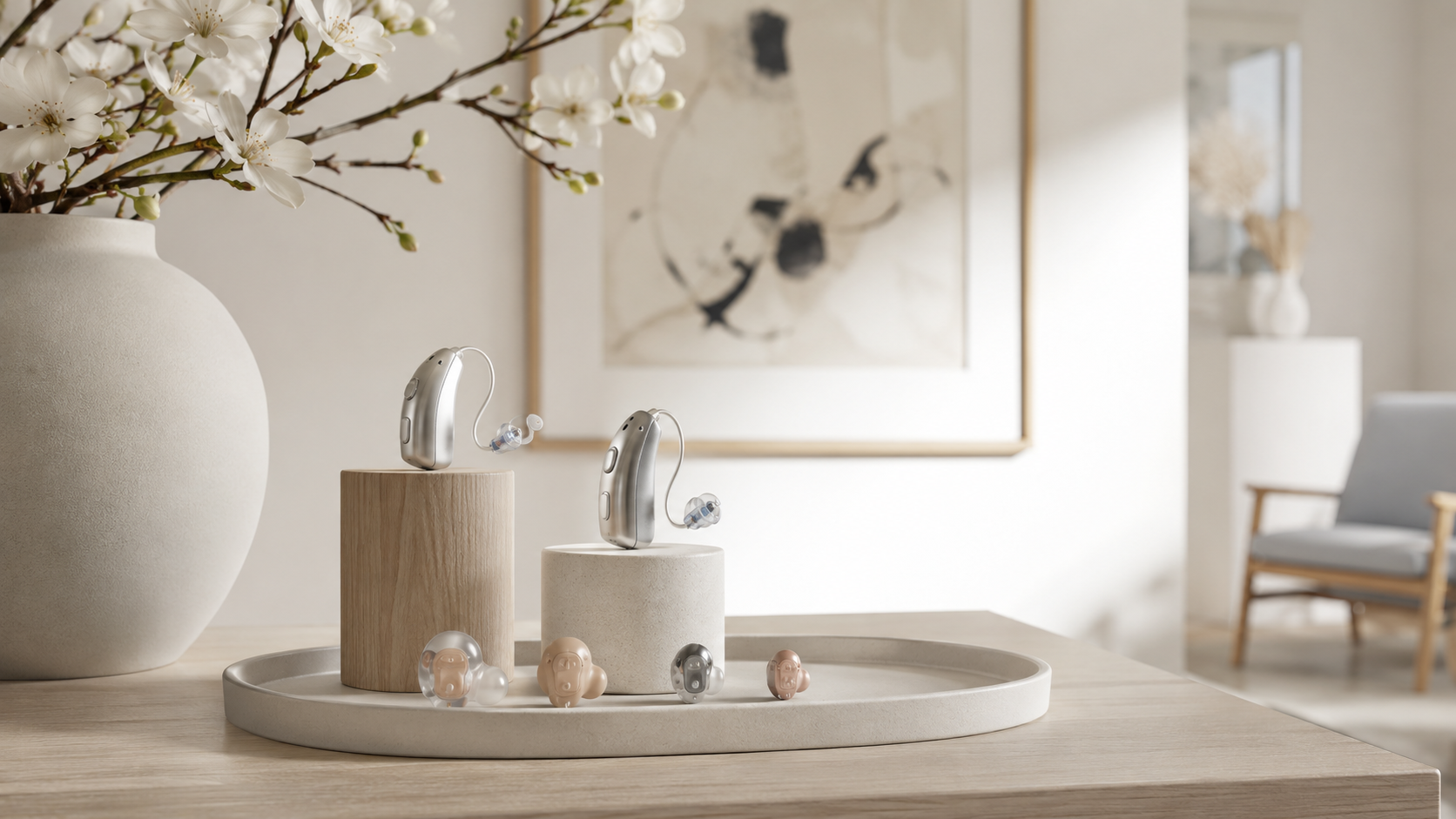
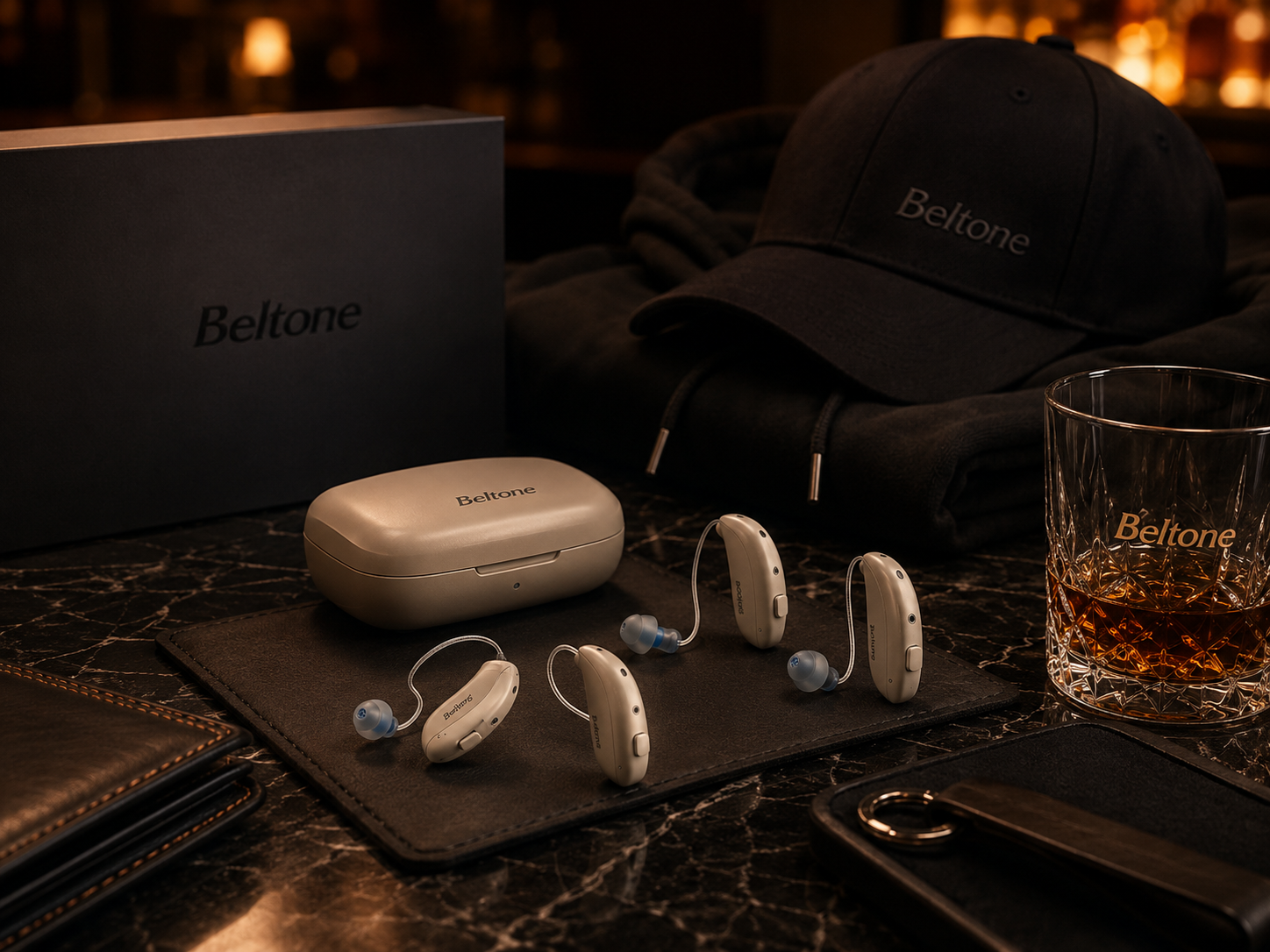
As an independent audiology clinic, we are not limited to one hearing aid manufacturer. We can discuss suitable options from leading hearing aid brands and recommend technology based on your hearing needs, lifestyle, comfort, budget and long-term support requirements.










Who Can Benefit from Hearing Aids?
Difficulty Hearing Conversations
You may hear people speaking but miss parts of words, especially in groups or noisy places.

Trouble Hearing TV Clearly
You may need the television louder than others prefer or still find speech unclear.
Struggling in Restaurants or Meetings
Background noise can make it hard to follow conversation, even when your hearing seems acceptable in quiet.
Frequently Asking People to Repeat
Repeating, guessing or avoiding conversation may become tiring over time.
Tinnitus with Hearing Loss
For some people, hearing aids may help reduce listening strain and support tinnitus management.
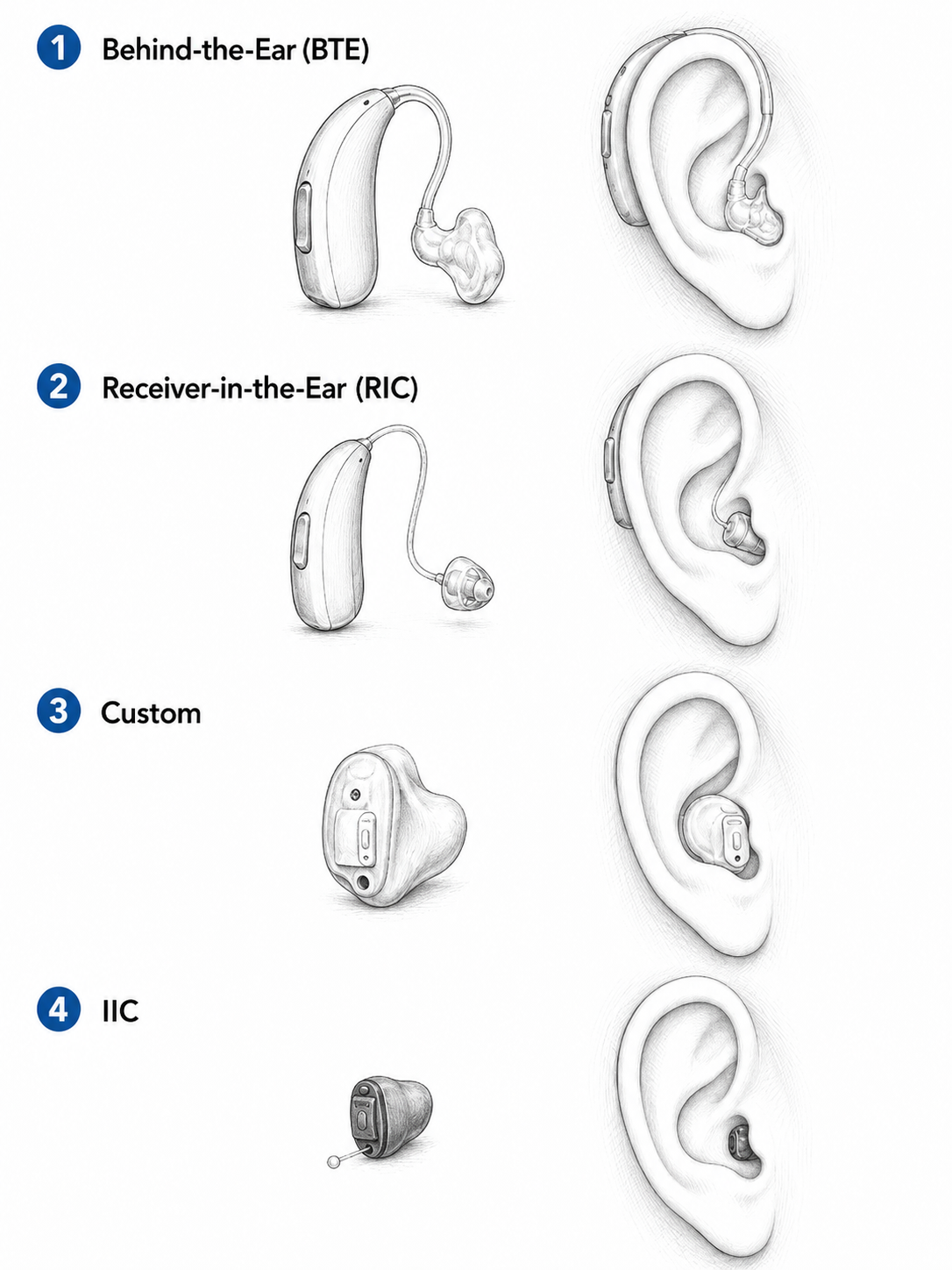
Types of Hearing Aids
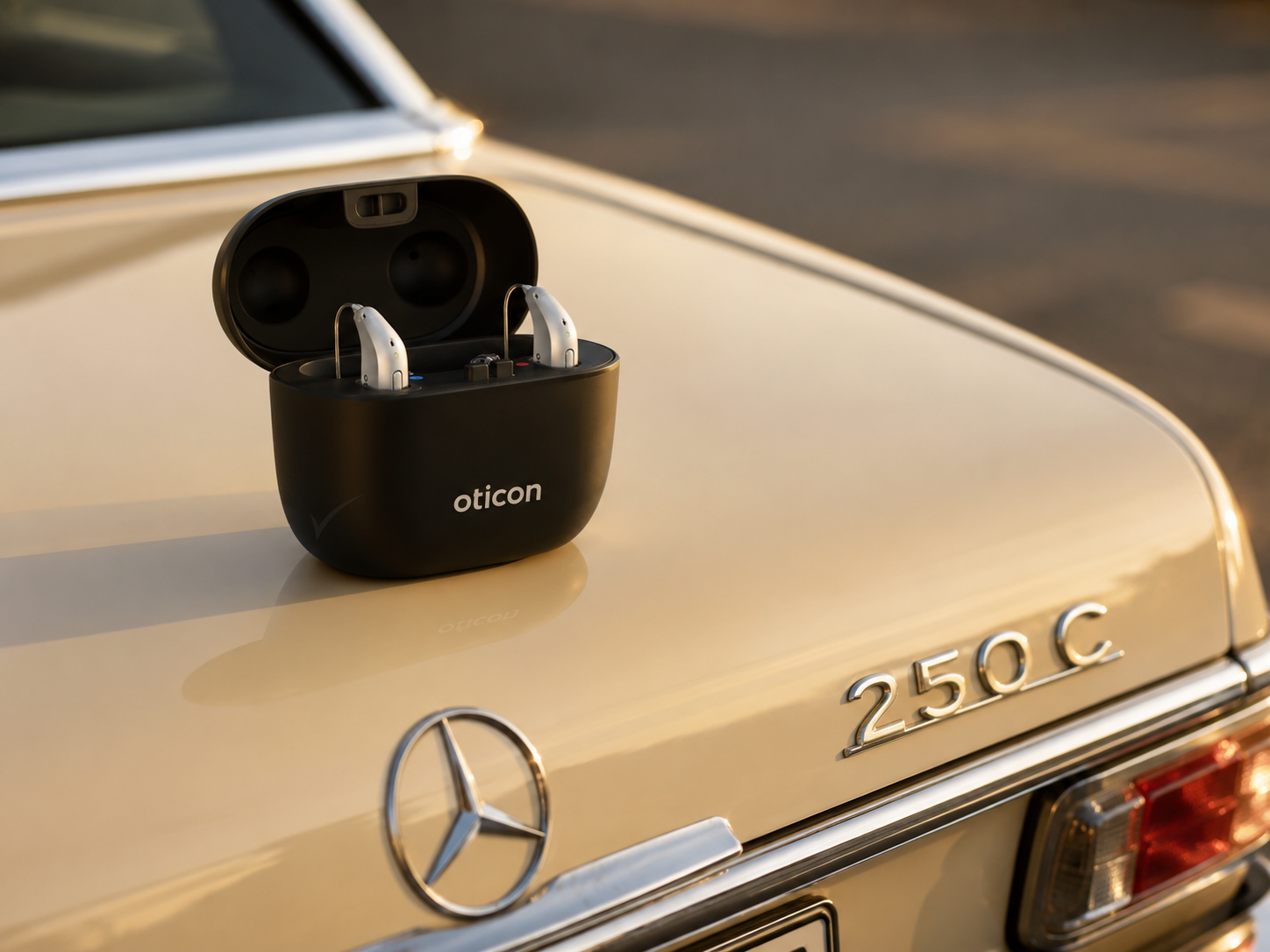
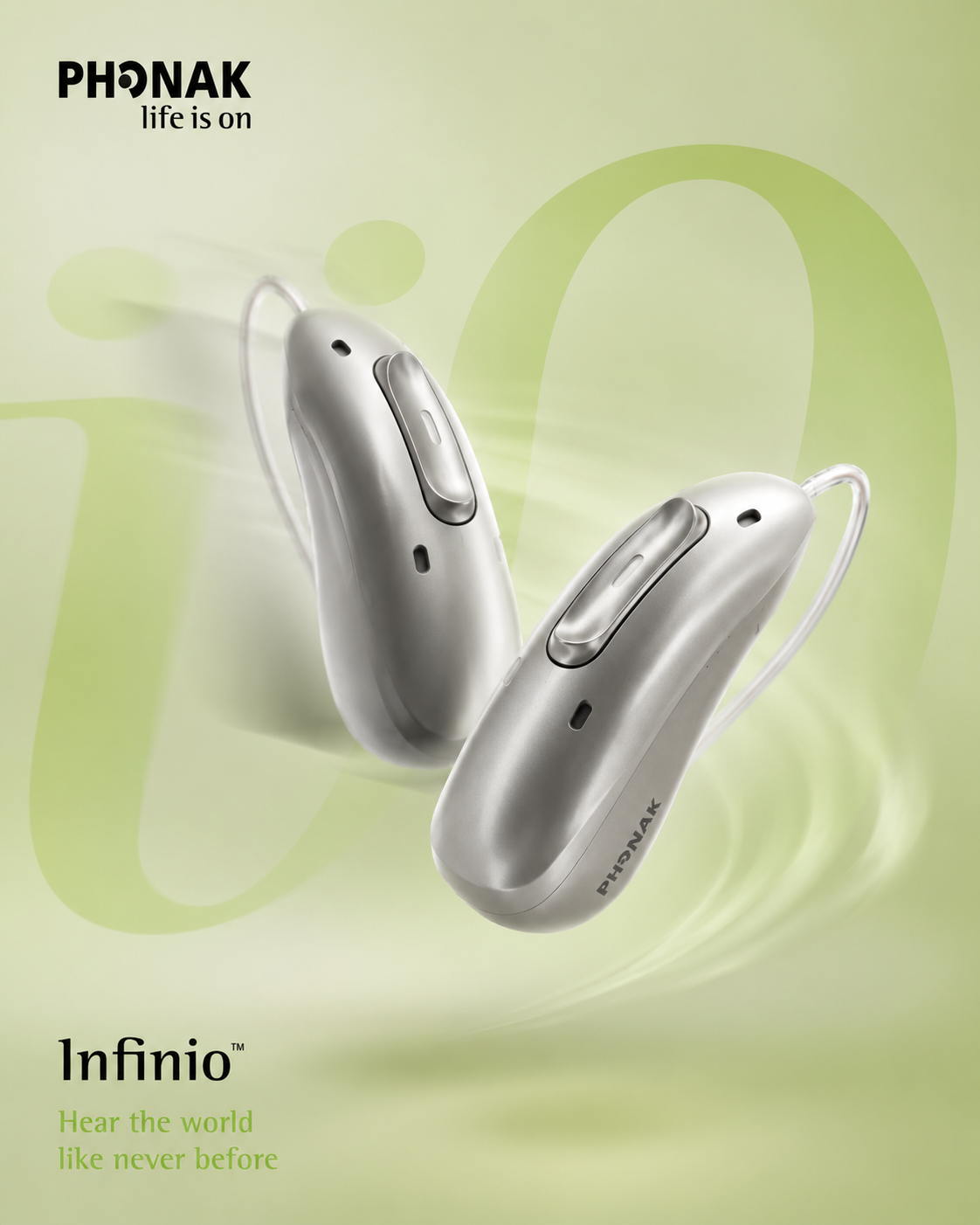
BTE hearing aids sit behind the ear, with sound delivered through tubing to an earmould or earpiece in the ear canal. BTE hearing aids are often reliable, easy to handle and suitable for a wide range of hearing losses. They may be a good option for clients who need more power, easier maintenance or a more secure fitting style.
Behind-the-Ear (BTE) Hearing Aids
Receiver-in-Canal (RIC) Hearing Aids
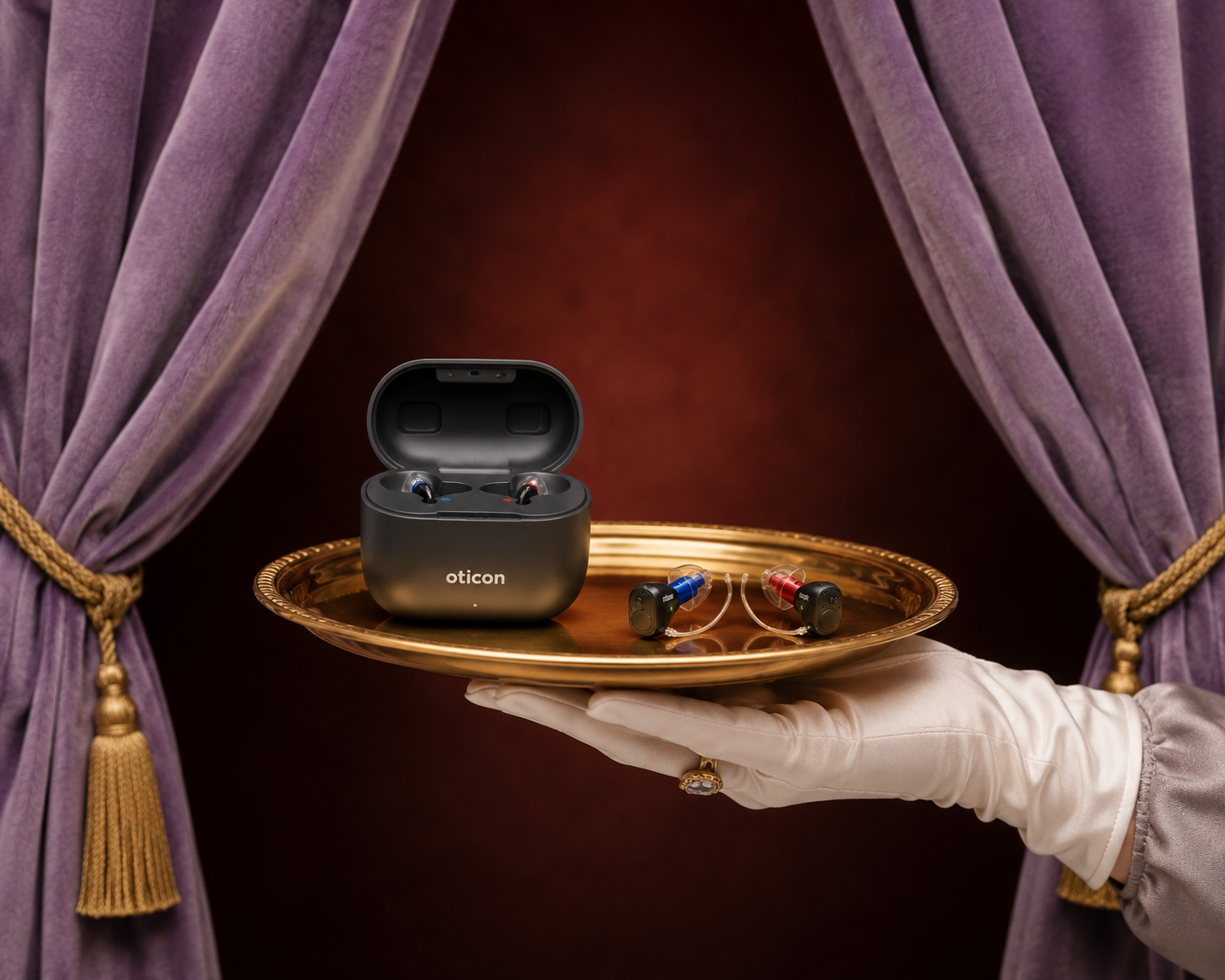
RIC hearing aids have a small body that sits behind the ear, with a thin wire leading to a small receiver in the ear canal. RIC hearing aids are discreet, lightweight and suitable for many common types of hearing loss. They are popular because they can provide a comfortable fit, natural sound quality and modern features such as rechargeability and Bluetooth connectivity.
Customised in the ear hearing aids are individually made to fit the shape of your ear. They sit partly or fully inside the outer ear and may suit clients who prefer an all-in-one device without a behind-the-ear component. The size and style can vary depending on the ear shape, hearing level and technology required. A professional assessment is needed to determine whether a custom style is suitable.
Custom In-the-Ear Hearing Aids
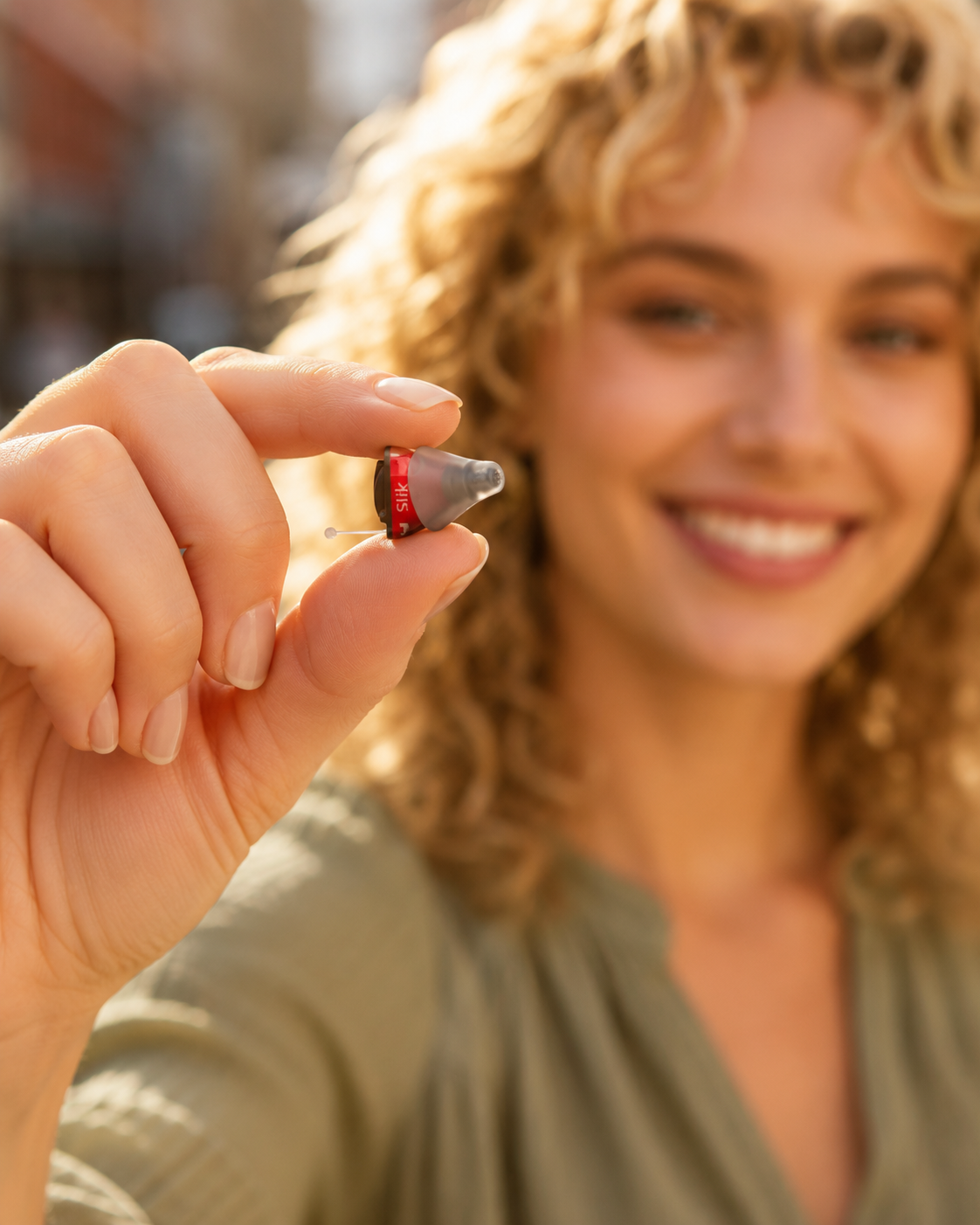
IIC hearing aids are tiny custom-made devices that sit deep inside the ear canal, making them one of the most discreet hearing aid options. They may suit clients who want a highly hidden style and have suitable ear canal shape, hearing levels and dexterity. Because of their small size, they may not suit everyone and may have limitations in power, battery life and connectivity.
Invisible-In-Canal (IIC) Hearing Aids
Technology Levels Explained
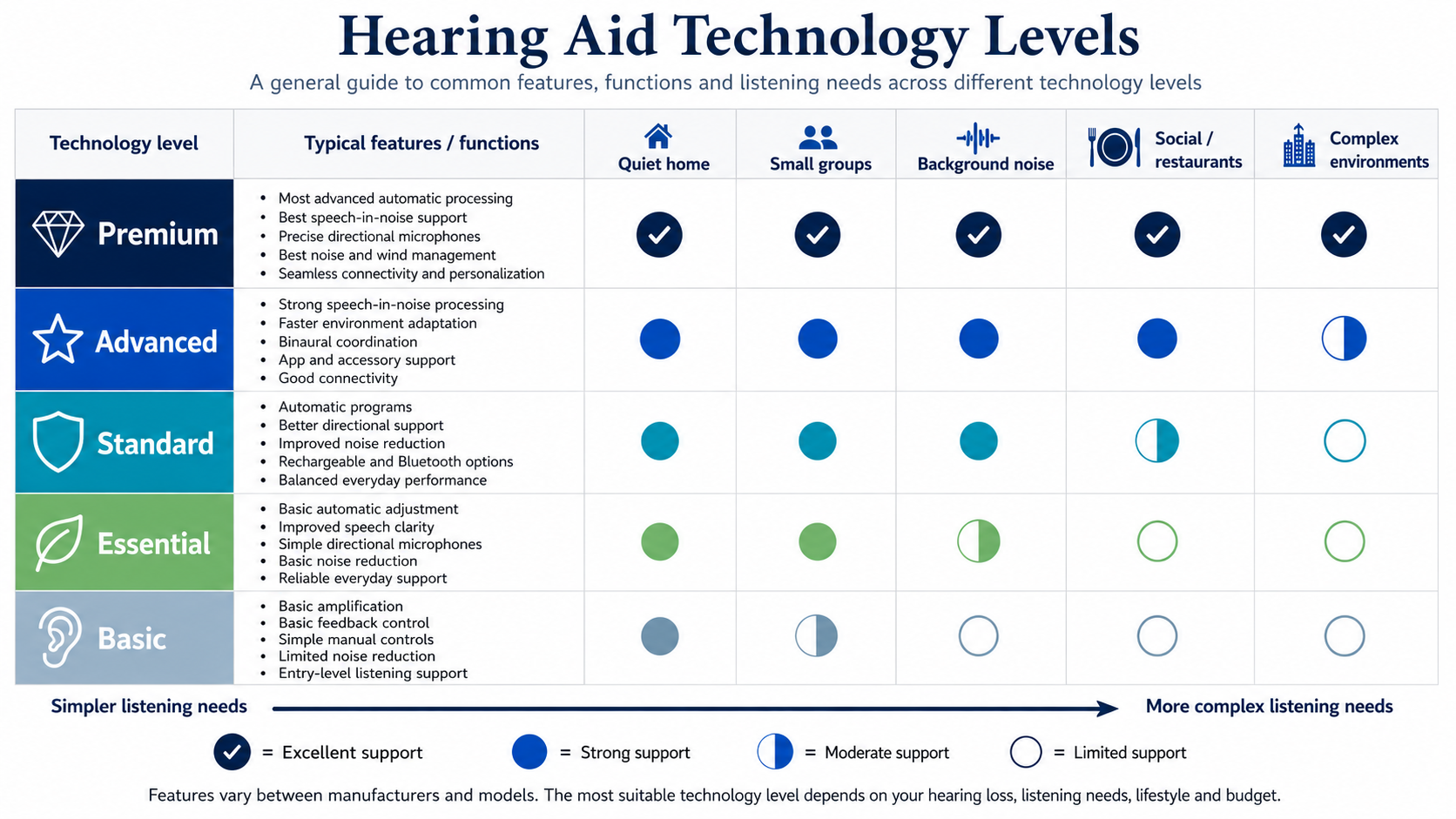
Hearing aids are available in different technology levels, and the right choice is not always the most expensive option. The most suitable level depends on your hearing loss, listening environments, lifestyle, communication needs and budget. During your consultation, we explain the differences clearly and help you choose technology that is practical, evidence-based and appropriate for your daily life.
Hearing aid technology can generally be grouped into five levels: Premium, Advanced, Standard, Essential and Basic. Each level is designed to support different listening needs, from simple one-to-one conversations in quiet settings to more complex environments such as restaurants, meetings, social gatherings and busy public places. The aim is to match the technology to your real-life communication needs, rather than simply choosing the highest level available.
Our Hearing Aid Fitting Process
-
![]()
01
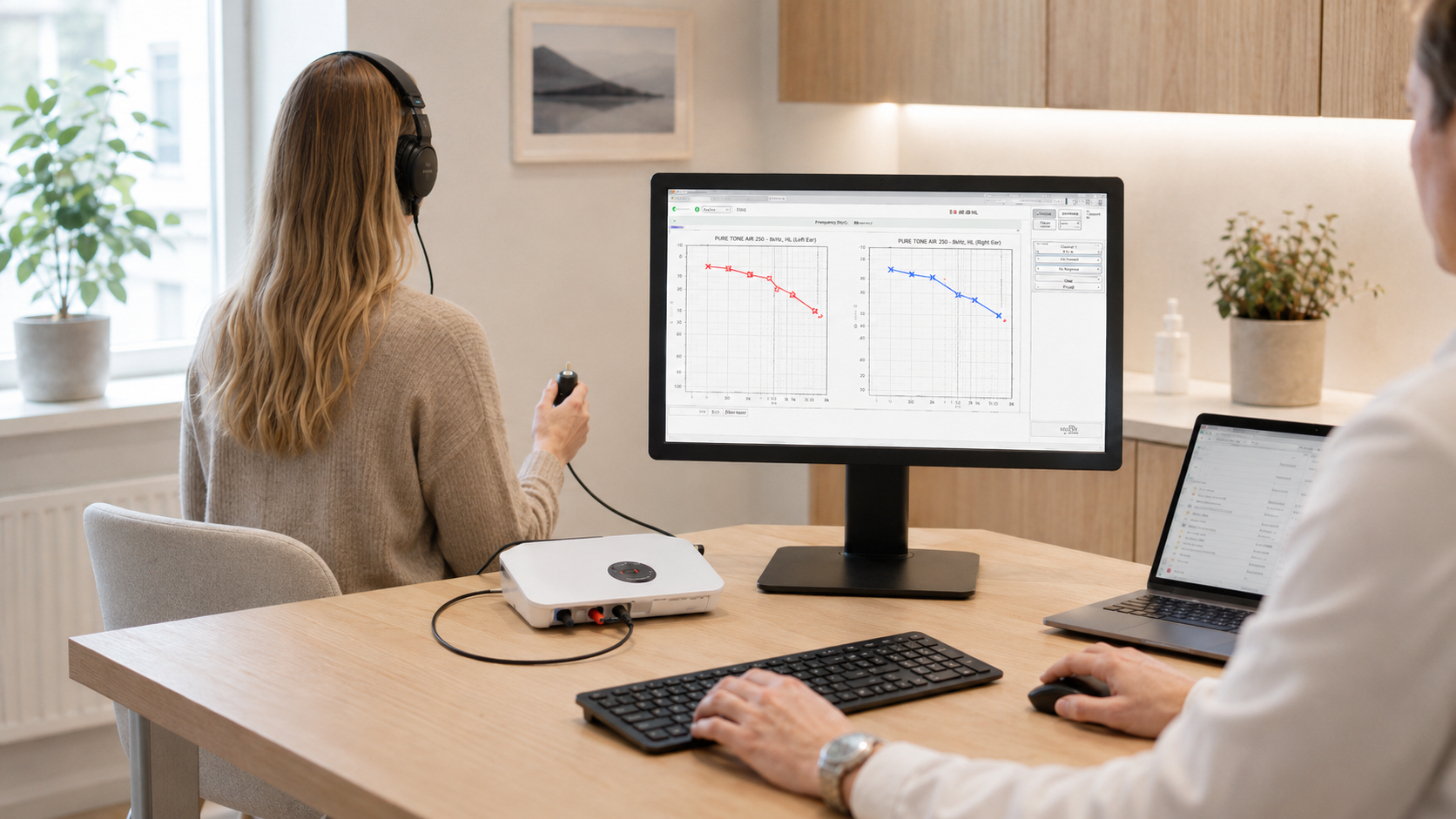
We first complete a comprehensive hearing assessment to understand your hearing levels and communication difficulties.
-
![]()
02
We discuss where you have the most difficulty, such as home, work, family gatherings, restaurants, TV or phone calls.
-
![]()
03
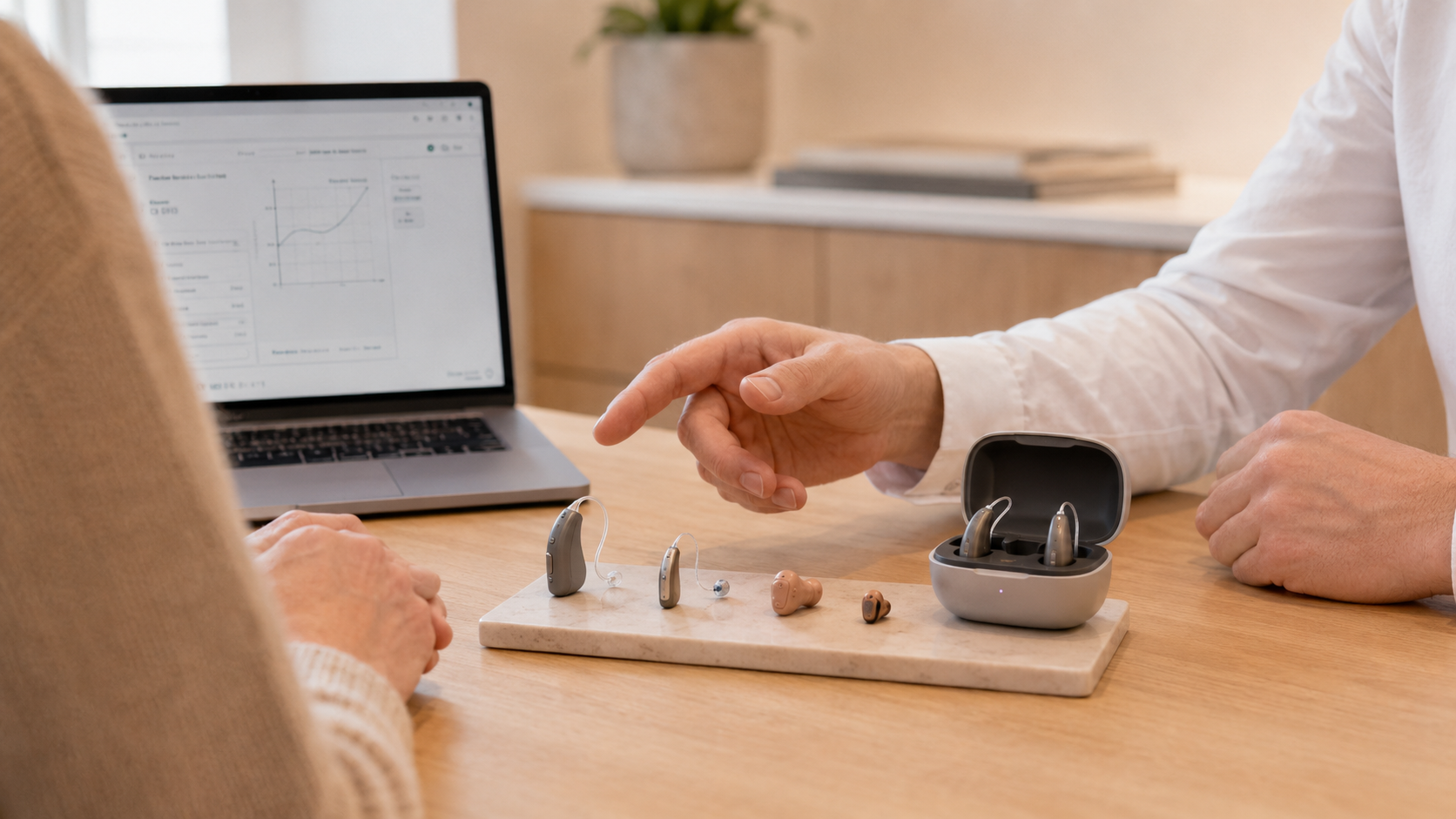
We explain suitable hearing aid options, technology levels and expected benefits in clear language.
-
![]()
04
Your hearing aids are programmed according to your hearing results, comfort and listening needs.
-
![]()
05
We fine-tune the hearing aids over time and help you adapt gradually to clearer sound.
-
![]()
06
We provide cleaning, maintenance, troubleshooting, reviews and long-term support.



How You'll Pay Your Hearing AidsHearing Aid Funding Options
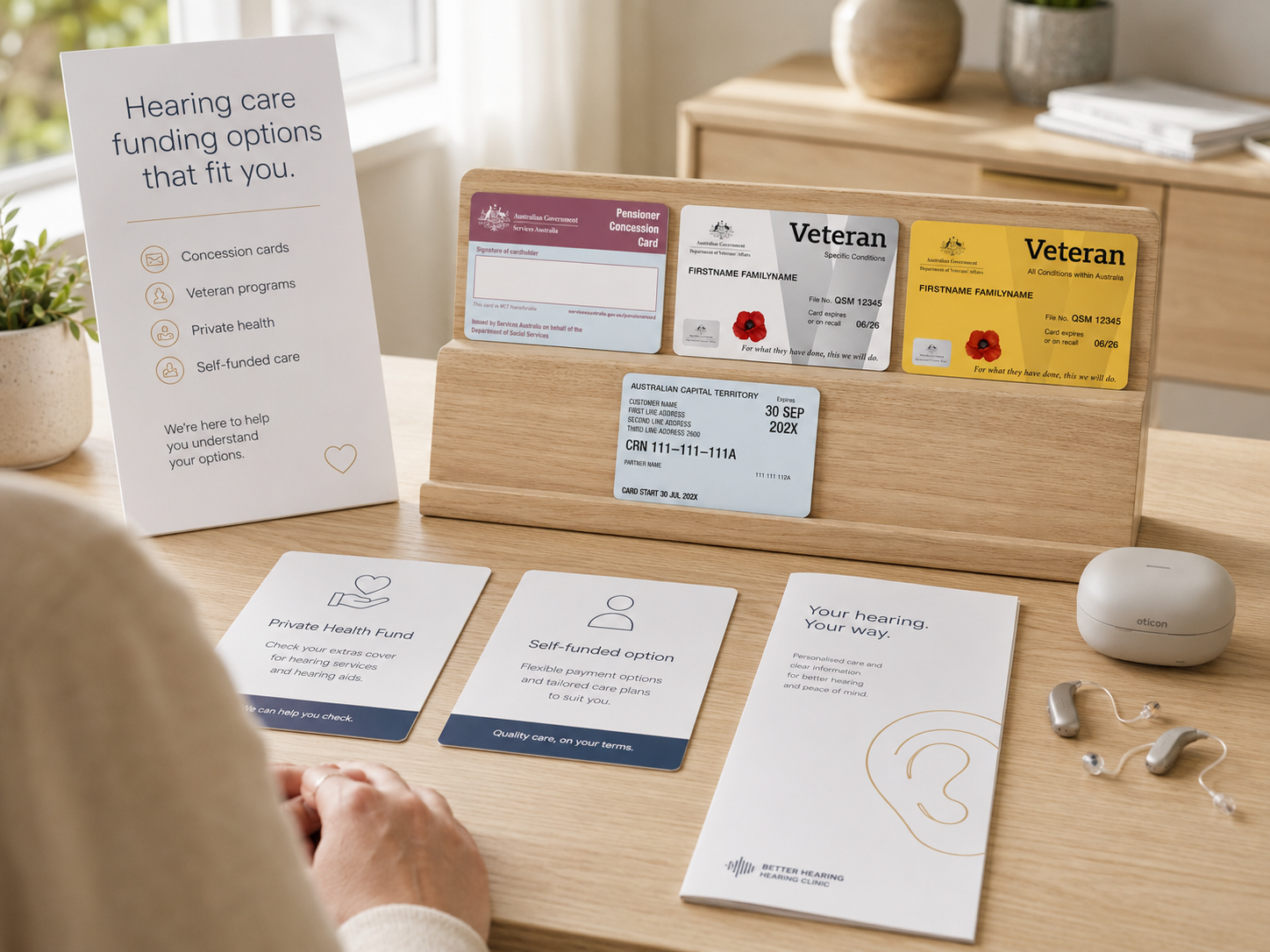
Eligible pensioners and concession card holders may be able to access hearing assessments, fully subsidised hearing aids, maintenance support and subsidised replacement devices through the Australian Government Hearing Services Program.
Government Funding: Hearing Services Program
Clients with approved work-related hearing loss claims may be able to access hearing aids, tinnitus support and ongoing hearing care through WorkCover or workers compensation funding.
WorkCover Hearing Aids
HSP, DVA Funding and Private Health Funding
Eligible Department of Veterans’ Affairs clients may access hearing assessments, hearing aids and ongoing support through DVA hearing services, depending on their individual entitlement and clinical needs.
DVA Hearing Services
Some private health insurance policies may provide benefits towards hearing aids. The level of cover depends on your health fund, extras policy and annual limits.
Private Health Fund
What Makes a Good Hearing Aid Result?Successful hearing aid fitting is not only about choosing a device. A good result depends on a complete clinical process — from accurate assessment and personalised recommendations to verified fitting, careful adjustment and ongoing support.
❋ Accurate Hearing AssessmentA comprehensive hearing assessment provides the foundation for successful hearing aid fitting. It helps us understand your hearing levels, speech understanding, ear health and the specific listening situations where you experience difficulty.
❋ Personalised Recommendation and Realistic ExpectationsThe right hearing aid should match your hearing needs, lifestyle, comfort, communication goals and budget. We explain suitable options clearly and discuss realistic expectations, including what hearing aids can improve and where listening may still be challenging.
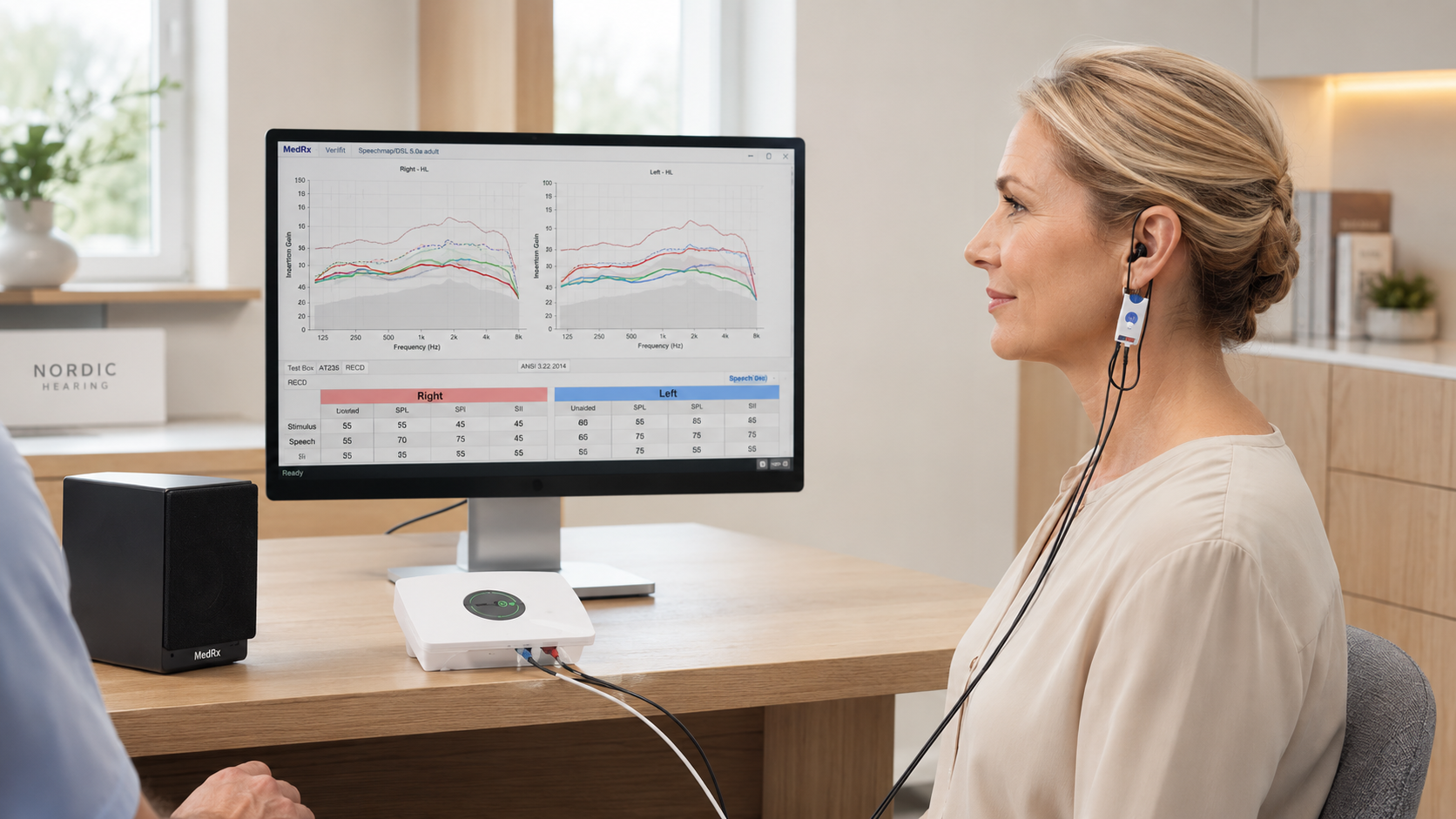
❋ Verified, Evidence-Based Fitting and ProgrammingProfessional fitting involves more than basic programming. Where appropriate, hearing aids are adjusted using clinical information, fitting targets and verification methods to support speech clarity, comfort and safe listening levels.
❋ Ongoing Fine-Tuning, Rehabilitation and Continuous CareHearing aid success often develops over time. Follow-up adjustments, listening strategies, rehabilitation advice, cleaning, maintenance and long-term care help you adapt with confidence and continue receiving benefit in daily life.
Frequently Asked Questions
-
Usually, yes — if mild hearing loss is affecting your daily life. Even mild hearing loss can make it harder to follow conversation, especially in groups, restaurants, meetings or when watching TV. Hearing aids may help improve speech clarity, reduce listening effort and support better communication in everyday situations.
The decision depends on your hearing results, lifestyle and communication goals. If you find yourself avoiding social situations, asking people to repeat, feeling tired from concentrating, or missing parts of conversation, hearing aids may be worth considering.
Untreated hearing loss has also been linked with increased dementia risk in observational research. However, hearing aids are not proven to prevent dementia. Their main benefit is helping you communicate more easily, stay socially engaged and participate more confidently in daily life.
-
No. Hearing aids do not restore natural hearing or make your ears “normal” again. However, well-fitted hearing aids can make speech and everyday sounds clearer, reduce listening effort, and help you communicate more confidently in many daily situations.
The main benefits of hearing aids include improved speech clarity, better awareness of surrounding sounds, easier listening in one-to-one conversations, and more confidence in social situations. They may also help reduce the strain and fatigue that can come from constantly trying to hear.
There are also limitations. Hearing aids cannot remove all background noise, fully restore damaged hearing cells, or guarantee perfect hearing in restaurants, large groups or very noisy environments. Successful hearing aid use depends on accurate assessment, appropriate technology, professional fitting, realistic expectations, practice and ongoing adjustments.
-
It’s tempting to put it off, but treating hearing loss early is actually about retraining your brain. When your ears stop sending certain frequencies to your brain, the auditory cortex (the part of the brain that processes sound) can slowly lose its ability to recognize those sounds. This is a concept called auditory deprivation.
If you wait too long, even the most advanced hearing aids can’t fully restore clarity because the brain has "forgotten" how to process those sounds. Addressing it early keeps your brain active, sharp, and socially connected.
-
It’s a fair question. The cost of a premium device reflects the incredibly sophisticated technology inside it. Modern premium hearing aids aren't just simple amplifiers; they are miniature computers equipped with deep neural networks (DNN) and artificial intelligence.
Instead of just making everything louder (including the clattering of dishes or traffic), premium chips scan the sound environment thousands of times per second. They instantly isolate human speech, suppress background noise, and adapt automatically as you move from a quiet car to a bustling café. You are paying for seamless speech clarity, automatic comfort, and the intensive research and development required to shrink that power into an invisible or discreet housing.
-
Think of it like the suspension system in a car. An entry-level hearing aid works beautifully in quiet environments—like one-on-one conversations at home or watching television. It provides clean, reliable amplification.
As you move up to advanced and premium levels, you are buying noise processing power. Premium devices give you maximum clarity in complex, unpredictable noise, faster automatic adjustments, and cutting-edge connectivity features (like direct streaming to your phone or advanced wireless audio systems). Your lifestyle usually dictates which level you need: someone who loves busy restaurants, boardrooms, or active social gatherings will benefit immensely from a premium device, while someone with a quieter routine may do beautifully with an entry-level model.
-
This is one of the most common anxieties we hear, but the short answer is no—hearing aids will not damage your natural hearing or make your ears "lazy."
What will happen is that your brain will quickly get used to hearing clearly again. When you take the hearing aids out, your natural hearing will suddenly feel much duller by comparison. This isn't because your ears have physically worsened; it’s simply because your brain is noticing the stark contrast between high-definition sound and muffled sound.
Think of it like wearing a pair of prescription reading glasses: wearing them doesn't ruin your eyes, but once you experience how effortless reading can be with them on, you naturally prefer not to strain without them. By providing your brain with the sound stimulation it needs, hearing aids actually keep your auditory system active, healthy, and engaged.